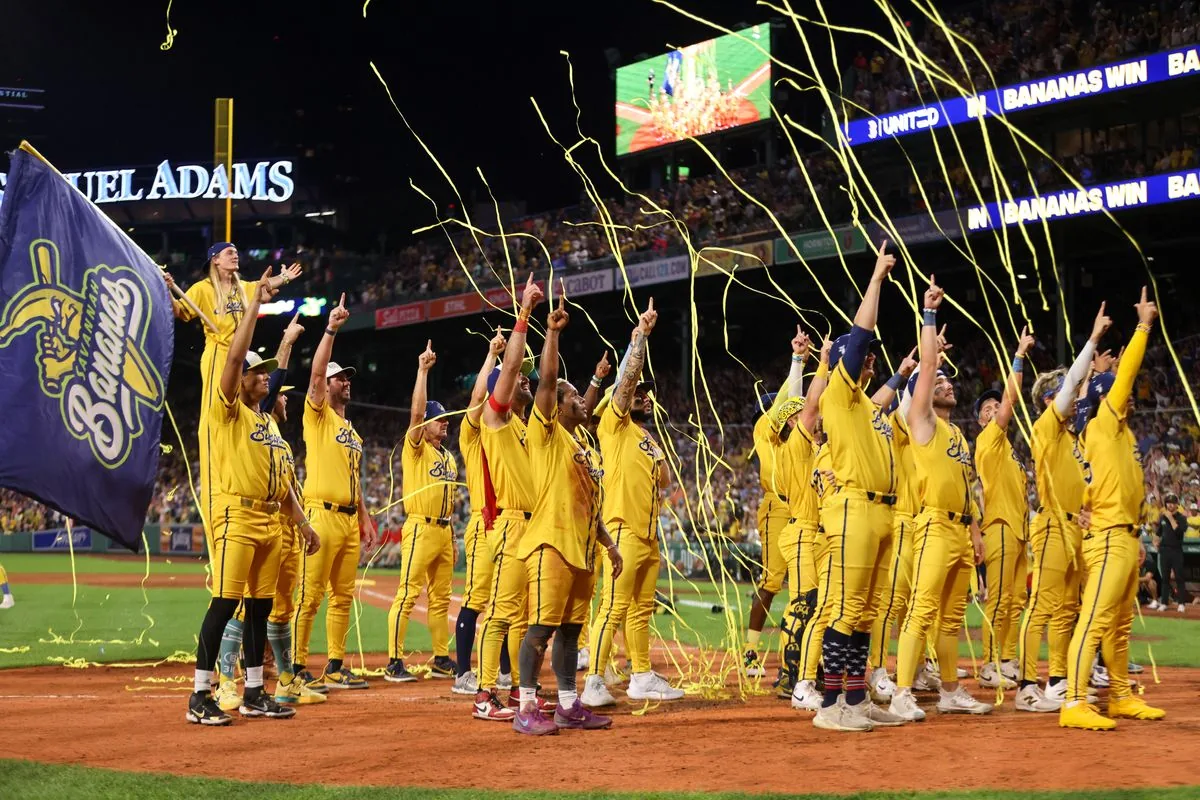
Banana Ball all-time stats are available through the official Banana Ball Stats database, but ?all time? needs a careful definition. In the current interface, a database-wide view aggregates the records stored across competitions when no individual season is selected; choosing a named season produces a narrower split. That makes the tool useful for career totals and historical comparisons, but it is a live database?not a frozen, separately certified record-book edition. New games, scoring corrections, qualification settings and filters can change what appears. The safest way to report a record is to name the metric, category, season scope, player pool and date checked. This guide shows how to do that without copying a leaderboard that may be stale tomorrow.
What ?All-Time? Means in the Official Banana Ball Database
For practical research, ?all time? means the full scope currently stored and aggregated by the official Stats product. It does not automatically mean every Banana Ball game ever played, every stat was captured with today's detail, or that the first row in a table is a permanently certified record.
That distinction matters because the season selector is organized by competitions, not just calendar years. As checked on August 2, 2026, the official selector contained published entries dated from 2020 through 2026. Some years have several choices. The 2022 data, for example, is divided among the World Tour, Summer Series, Challenger Series and Banana Fest. The current 2026 choices include the World Tour and Banana Ball Open as distinct scopes.
Best short answer: use the unfiltered official database for a career-style view, but describe any leader or record as what the database showed under specific filters on a specific date.
This approach protects readers from two common errors: blending separate competitions because they share a year, and presenting a changing total as if it came from a printed historical record book.
How to Find Banana Ball All-Time Stats and Season Splits
The official interface separates player, team and special-play questions. Before sorting any number, decide whether you want an individual's performance, a club total, a Showdown measure, a single game or a standings position. Then follow the same filter sequence every time.
- Open the official Stats database. Start at the Players view rather than relying on a screenshot or a search-result snippet.
- Choose the correct category. Use Players for individual numbers, Teams for club aggregates and Showdowns for the tiebreaker-specific data. Games and Standings answer different questions.
- Set the season scope. Leave the individual season filter unselected for the current database-wide view. Select a named competition for a season or event split.
- Choose the stat family. In player data, switch among Hitting, Pitching and Fielding before selecting the column.
- Check the player pool. Qualified Players and All Players do not answer the same question, especially for rate statistics.
- Apply any team, position or location filter, then sort. Write down every active filter and the access date before calling the top value a leader or record.
Why the Competition Name Matters as Much as the Year
?2026 stats? can be ambiguous. A number from the 2026 World Tour is not automatically the same as a number from the 2026 Banana Ball Open, and neither should silently stand for every 2026 event. Read the year and description together. If you are comparing two players, confirm that both rows come from the same selected competition?or intentionally use the database-wide scope for both.
A quick scope check can catch mistakes. In a test of the official data on August 2, the same first returned player row showed far more games in the unscoped response than in the 2025 World Tour response. That observation does not identify a leader; it simply proves that applying a named competition changes the population and totals.
What Statistics Does the Official Database Track?
The database combines familiar baseball measures with fields created for Banana Ball. That is useful, but it also means the word ?record? is incomplete until the exact column is named. A home-run record, Trick Play Outs record and Showdown Shutdowns record describe entirely different skills.
| Stat area | Representative fields | What it helps answer |
|---|---|---|
| Hitting | Games, at-bats, runs, hits, doubles, triples, home runs, RBI, AVG, OBP, SLG, OPS | How often and how effectively a player produced at the plate |
| Pitching | Innings pitched, hits allowed, earned runs, strikeouts, ERA, pitches per inning | Workload, prevention, command and pace |
| Fielding | Errors, Trick Play Outs, Trick Plays Missed and related rates | Defensive execution, including Banana Ball's creative plays |
| Banana Ball-specific offense | Ball-Four Sprints, Steals of First Base, Golden Batter opportunities, fan foul outs | Performance created by rules that do not exist in standard baseball |
| Showdowns | Opportunities, walk-offs, home runs, strikeouts and shutdowns | What happened in the head-to-head tiebreaker format |
| Team and game context | Record, games, runs, points-related measures and opponent/game detail | How individual production connects to club performance and results |
Use the glossary inside the official product when an abbreviation is unfamiliar. It defines Ball-Four Sprint (B4S), Steals of First Base (SB1B), Caught Stealing of First Base (CS1B), Trick Play Outs (TPO), Trick Plays Missed (TPM), Minutes Per Inning (MPI), Showdown Opportunities (SDO) and other specialized fields. Do not assume two similar labels share the same definition, and do not assume every field has identical historical coverage.
Banana Ball Points and Runs Are Not the Same Stat
This is the most important scoring distinction in any Banana Ball record discussion. Under the official rules, the team that scores more runs in an inning gets the point for that inning. The designated last inning is different: every run counts. The Showdown Tiebreaker also has its own point procedure, including an every-run-counts final Showdown situation.
Therefore, runs remain meaningful offensive data, but the ordinary cumulative run total is not interchangeable with the official points result. A team can pile up several runs to win one early inning and receive one point, while another team can win several separate innings and lead the game in points.
| Use points for | Use runs for |
|---|---|
| Identifying the official winner and final game result | Determining who won an inning and measuring offensive production |
| Reading a Banana Ball final score | Comparing team or player run creation within the chosen scope |
| Following the BBCL competition result | Understanding how much scoring occurred, with final-inning context |
For a fuller scorecard walkthrough, read how Banana Ball stats work. For a completed game's result, use the site's Banana Ball scores page and read the points result before comparing runs.
Qualified Players Versus All Players
Two people can sort the same stat and honestly see different names because they selected different player pools. The official interface offers Qualified Players and All Players, along with other filters such as active and rookie status. When qualification is configured, Qualified Players is the default pool.
As checked on August 2, 2026, the official qualification settings reported 2.5 plate appearances per team game for hitters and 0.5 innings pitched per team game for pitchers. These are live configuration values, not a promise that the thresholds will never change.
Qualification matters most for rate stats. A guest or limited-use player can post an extreme batting average or ERA in a tiny sample. The qualified pool adds an opportunity threshold so the ranking better represents sustained performance. All Players is still the right choice when you need an exhaustive name lookup, a guest appearance or a counting-total audit.
- For AVG, OBP, SLG, OPS or ERA leaders, start with Qualified Players.
- For a complete player search or a specific cameo, use All Players.
- For career volume such as games, hits or home runs, state the pool and database scope even if qualification is not the main issue.
How to Verify a Banana Ball Record Claim
A record claim should be reproducible. ?Most ever? is not enough because the claim could describe a career, one competition, one game, a qualified rate, a raw total, attendance or an entertainment milestone.
- Define the record family. Write ?career,? ?single season/competition,? ?single game? or ?event/attendance? before searching.
- Select the exact official scope. Use the database-wide view for a career-style question or the named year-plus-competition for a split.
- Confirm the player pool. Qualified and All Players can produce different rate-stat leaders.
- Sort the exact field. Do not use runs as a proxy for points, hits as a proxy for batting average, or total trick attempts as a proxy for successful Trick Play Outs.
- Check game-level context. For a single-game claim, open the game and box-score detail where available. Career totals cannot prove what happened in one game.
- Save the evidence context. Record the filter labels, value and access date. A screenshot can help, but the first-party row should remain the source.
- Treat articles and social posts as leads. If a headline says ?record,? identify whether it means a statistical, attendance, venue or broadcast record before repeating it.
A precise attribution might read: ?The official Banana Ball database showed this player first in the selected 2025 World Tour, Qualified Players, hitting view on August 2, 2026.? That is longer than ?all-time record holder,? but it tells another reader exactly how to check the claim.
Limits of All-Time Banana Ball Comparisons
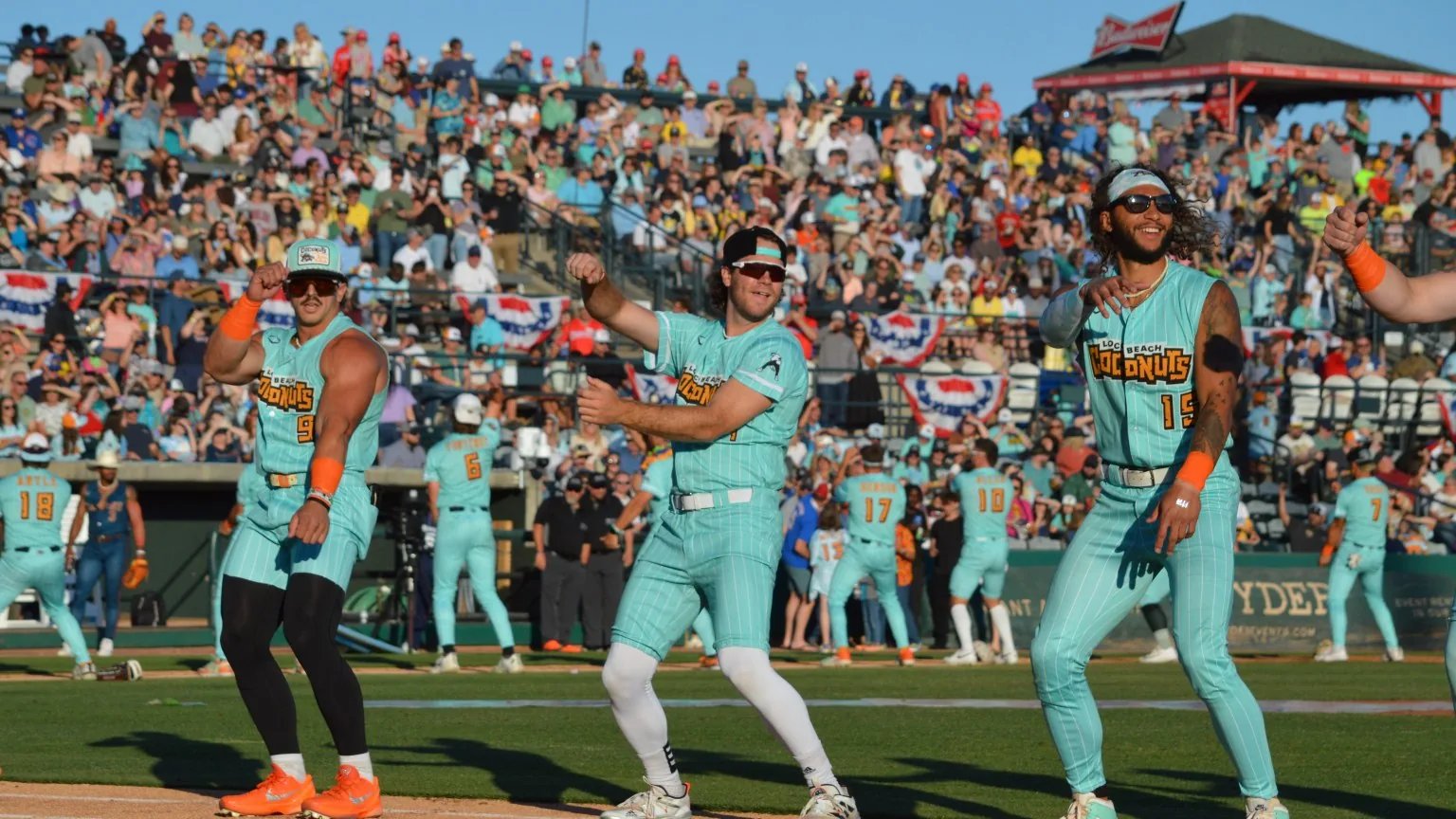
The official database is the strongest starting point, yet historical comparison still needs context. Banana Ball began as special-event games and developed into larger tours and the six-team BBCL structure. The current season menu reflects that history through separate tours, series, opens and special events.
Keep these limitations in view:
- Stored history is not a completeness guarantee. The selector currently begins with entries dated 2020, but that does not prove every game or every modern field was captured equally.
- Opportunity changed. Longer schedules and more games create more chances to accumulate counting totals.
- Events are not interchangeable. A World Tour, Open, All-Star event and championship competition can represent different player populations and incentives.
- Rules and league context evolve. New BBCL structures and rules such as the Trick Play Equalizer affect what is measured and how teams compete.
- Current team is not career attribution. A player's present team label does not prove every historical statistic was earned for that club.
- Live data changes. Finalized games, corrections, qualification thresholds and active filters can reorder a board.
These are reasons to compare carefully, not reasons to discard the data. Include games played, plate appearances or innings pitched, use the same competition scope on both sides, and check the definition of every Banana Ball-specific field. The current Banana Ball teams directory can confirm today's club structure, but historical attribution should come from the relevant season/game data.
Where to Check Live Scores and Standings
An all-time guide should not duplicate information that changes after every game. Use the right live page for the question:
- Banana Ball scores for completed results, points and game details.
- BBCL standings for the current season table and playoff-race context.
- Banana Ball teams for the current six-team directory and team pages.
- The official Stats database for database-wide player/team totals, named competition splits and specialized measures.
Standings are season-specific competitive positions; they are not career totals. Likewise, a recent box score answers what happened in one game, while an all-time player row answers what is currently aggregated across the selected database scope.
Banana Ball All-Time Stats FAQ
Is there an official Banana Ball record book?
There is an official interactive Stats product. It is best treated as a live database rather than a separately published, frozen record-book edition. Cite the metric, filters and date checked.
How far back do official Banana Ball stats go?
As checked on August 2, 2026, the official season selector included competition entries dated from 2020 through 2026. That describes the visible selector, not a guarantee that every historical game and every stat field is complete.
Can I compare players from different seasons?
Yes. Use the database-wide view for aggregated totals or select matching competition splits. Add games, plate appearances or innings pitched and qualification context so the comparison is meaningful.
Are runs the Banana Ball score?
No. Points determine the official result. Runs determine the inning winner during ordinary innings and are also counted under the special last-inning and final Showdown procedures in the current rules.
Why did a leaderboard change?
The selected season, category, player pool, qualification settings, new finalized games and corrections can all change the order. Recheck the first-party database instead of relying on an old screenshot.
Comments
Comments are reviewed before publication. Spam, personal information and abusive content are not published.
Loading comments…