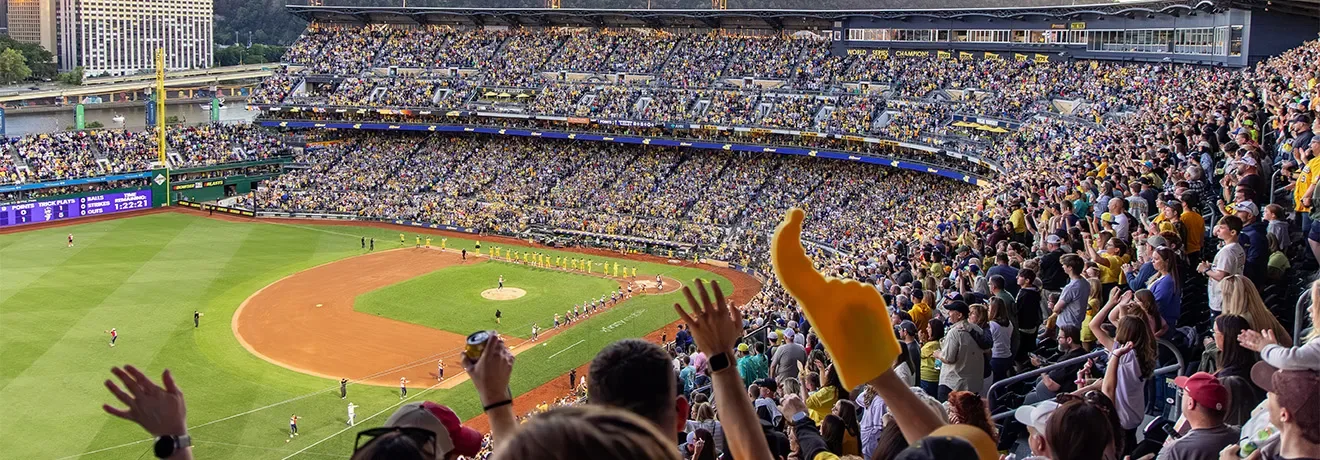
Banana Ball’s challenge rule gives each team a way to request replay review and gives fans a separate, one-play opportunity through a representative selected before the game. For a team challenge, the coach must send the team’s challenge prop or item onto the field before the next pitch. The current reviewable list covers fair-or-foul calls, force-or-tag plays, catches in the infield or outfield, and missed-base calls. The umpiring crew reviews the play, while the Umpire Field Chief makes the ruling described by the official rules. An overturn lets a team retain its challenge; an upheld or inconclusive review ends that team’s challenge opportunity for the game. The fan representative makes a review request with confetti and a sign—the crowd does not decide the call.
The Challenge Rule in One Play Sequence
A Banana Ball challenge is easier to follow when you separate the live ruling from the review result. The original call remains the operative decision unless the formal process changes it. A coach pointing, arguing, or reacting is not enough by itself; the team must use its designated challenge item within the published deadline.
- An eligible play receives an on-field ruling. The disputed event must fit one of the categories published in Rule 10.
- The coach acts before the next pitch. The coach throws or shoots the team’s challenge prop or item onto the field.
- The play enters review. The umpiring crew examines the play rather than treating the signal as an automatic reversal.
- The ruling reaches the Umpire Field Chief. The official rule assigns that official the call after the replay process.
- The result determines what happens next. The call is overruled, upheld, or judged inconclusive, and a team’s future challenge status follows that result.
When following today’s Banana Ball games, watch that order. A replay shown on a video board may make the crowd roar, but the reaction is not the ruling. Likewise, a spectacular team prop starts the request; it does not prove the coach was right. The public rules do not require one identical prop design at every game or prescribe one fixed announcement script, so the reliable markers are the before-next-pitch action, the review, the Umpire Field Chief’s decision, and the resulting challenge inventory.
Team Challenges and Fan Challenges Are Separate
The fan challenge is “in addition to” each team’s challenge, so it should not be treated as a shared pot. At the start of a game, the useful mental scorecard has three lines: one opportunity for each club and one fan opportunity. Only the designated initiator can activate the relevant line.
| Feature | Team challenge | Fan challenge |
|---|---|---|
| Who requests review? | The team’s coach | One representative chosen before the game |
| How is it signaled? | The coach throws or shoots the team challenge prop/item before the next pitch | The representative shoots confetti and holds up the “Fan Challenge” sign |
| Initial supply | One opportunity for each team | One fan opportunity during the game |
| Can it continue after success? | Yes, when the call is overruled | The official wording says one play a night; it does not publish a renewable fan inventory |
| Who decides the call? | The designated umpiring and replay process, not the initiator | |
This separation matters late in a close contest. One team may already have lost its opportunity, the other may still hold one, and the fan representative may not have acted. A fan request does not consume a club’s team challenge merely because the disputed ruling affects that club. In the opposite direction, a coach’s request does not use the audience opportunity.
It is also inaccurate to describe the fan mechanism as a stadium referendum. The fans choose a representative before the game, and that person decides whether to request review of one play. The current public rule does not say that the audience votes on the replay or publishes one selection ceremony required at every venue. When checking the teams in a Banana Ball matchup, keep the club identities and the separate fan representative visible; that makes later signals much easier to interpret.
The Four Calls Eligible for a Challenge
Rule 10 publishes four categories, not an open-ended promise to review every disagreement. The category should describe the exact ruling under dispute:
- Fair or foul ball calls
- A review can address whether a batted ball was fair or foul. A ball near a line is the obvious viewing example, but the category is the ruling—not merely the fact that the play was close.
- Force or tag play calls
- This covers whether a force or tag produced an out. A tight play at a base may fit, as can a tag attempted on a runner between bases.
- Catch plays in the infield or outfield
- The review can determine whether a fielder completed a catch. The official wording includes both areas of the field, so it is broader than only diving outfield plays.
- Missed-base calls
- The current page expressly includes a ruling about whether a runner missed a base while advancing.
The missed-base entry is the freshness trap. The original 2023 announcement and numerous later summaries reproduce a three-category list: fair/foul, force/tag, and catch plays. Those pages can describe the rule’s history, but they should not displace the live official page, which now names missed bases as a fourth category.
Pitch calls are another common source of confusion. Balls and strikes are not listed among the four categories on the current public rules page. That careful wording is more accurate than claiming knowledge of every unpublished event instruction or unusual compound play. You can browse available Banana Ball videos and highlights to see how close plays unfold, but footage or fan comments do not create a new eligible category. First name the disputed call, then match it to the published list.
Who Reviews the Replay and Who Makes the Call?
The official page assigns two connected roles. It says the umpiring crew reviews the play and that the call is replayed to the Umpire Field Chief, who makes the call. That is the safest description of current authority. A coach or fan representative can initiate an eligible review, but neither becomes the replay judge by doing so.
Contemporary explainers sometimes describe the broadcast as part of the review, and a first-party game example showed replay on a giant stadium screen before a tag ruling was overturned. Those details help a viewer recognize what a review can look like. They do not turn the screen, announcers, or cheering spectators into the official decision-maker. The request and the ruling belong to different people.
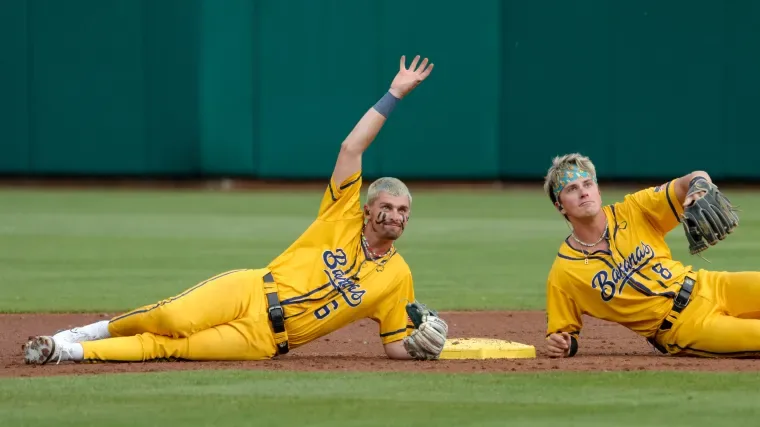
The public rules leave some production details unstated. They do not publish a fixed number of camera angles, name a universal off-site replay room, promise one review duration, or prescribe a particular phrase that every official must use. One documented game transcript mentioned a time limit and conclusive evidence, but a single example should not be promoted into a permanent standard without current official text.
That distinction also prevents a misleading comparison with Major League Baseball. Banana Ball’s public rule does not say it uses MLB’s Replay Command Center or the automated ball-strike challenge system. For a fan in the venue, the disciplined approach is simple: observe the signal, watch whatever replay presentation is available, and wait for the Umpire Field Chief’s ruling. A persuasive angle on the board may influence your opinion; only the designated process changes the call.
When a Team Retains or Loses Its Challenge
A team’s initial opportunity is not necessarily its only use. The rule rewards a successful challenge by returning that team’s ability to challenge later, but it treats two other results as final for the team’s inventory.
| Review result | On-field call | Team’s future challenge status |
|---|---|---|
| Team wins the challenge | Call is overruled | Team retains a challenge for later in the game |
| Call is upheld | Original ruling remains | Team loses its opportunity for the rest of the game |
| Review is inconclusive | No sufficient basis is announced to overrule | Team loses its opportunity for the rest of the game |
The third row is the one most likely to surprise a newcomer. “Inconclusive” does not preserve the challenge as a free do-over under the current wording. Even though the replay failed to settle the dispute, the team has spent its opportunity. That creates a real cost to challenging a play for which useful replay evidence may be weak.
Retention should also be understood as keeping an available challenge, not receiving an unlimited stack of challenges. If a team earns an overturn, it can challenge again later; the next attempt is still judged under the same result rules. A reported 2026 game in Chapel Hill included a coach’s successful challenge that overturned a double-play ruling, illustrating the successful branch without changing its definition.
Wait for the formal result before updating your mental scorecard. “The play is under review” tells you nothing yet about later inventory. After the game, the site’s Banana Ball scores and results can confirm the final contest outcome, while the challenge result explains how a particular play reached its final ruling. The two records answer different questions.
How the Fan Representative Uses the One Opportunity
The fan challenge turns audience participation into a defined review request rather than a running power held by everyone in the seats. Before the game, the fans choose one person to represent them. The official page gives that representative the opportunity to challenge one play during the night.
Before the game
The representative is identified before play begins. Beyond saying that the fans choose the person, the public rule does not prescribe one universal nomination, vote, random draw, costume, or ceremony. A venue may make the selection entertaining, but event presentation should not be mistaken for permanent rule text.
When the representative wants review
The official action has two visible parts: the representative shoots off confetti and holds up the “Fan Challenge” sign. That combination makes the request official. The representative is choosing to spend the fan opportunity on a play; the person is not declaring the runner safe or out, and is not empowered to overrule an umpire.
After the signal
The play follows the review process and receives a ruling. Two reported games show why the distinction matters. In an early MLB-stadium example shared by Jesse Cole, the representative challenged a close tag play, replay appeared on the giant board, and the call was overturned. At a 2023 game in Brockton reported by Boston.com, the fan challenged a close first-base call and the call was upheld. Confetti opened both review paths; it guaranteed neither result.
The phrase “one play a night” also means fans should not expect the opportunity to regenerate after an overturn. The team rule explicitly explains retention after a successful team challenge; the fan subsection does not provide parallel renewal language. A sensible representative may therefore care about eligibility, available evidence, and the play’s impact, but that is strategy—not an extra requirement. The binding facts are the pregame representative, the single play, the confetti, the sign, and the official review ruling.
A Practical Challenge Decision Checklist
The official rule defines procedure and consequences; it does not publish a coach’s or representative’s strategy formula. The following checklist is practical editorial advice built from those constraints, not another set of Banana Ball laws:
- Is the ruling eligible? Name the dispute first. If it cannot be matched to fair/foul, force/tag, catch, or missed base, the current public list does not support the request.
- Can the signal happen in time? A team coach must act before the next pitch. A theoretically strong challenge that misses the published deadline cannot follow the normal team procedure.
- Is useful replay evidence likely to exist? A difficult angle matters because an inconclusive team review costs the opportunity. Industry reporting on Banana Ball production notes that full venues can limit ideal camera placement.
- How much did the ruling change the play? An out, safe call, completed catch, boundary decision, or missed base may alter runners and inning pressure. Consequence does not determine eligibility, but it affects the value of spending scarce inventory.
- Which opportunity is still available? Track each team and the fan representative independently. Do not recommend a fan signal that has already been used or a team review that was previously lost.
The order is intentional. Eligibility and timing are hard gates; evidence, impact, and inventory are judgment factors. A high-impact play does not become reviewable simply because it feels important. Conversely, saving an opportunity forever has no value if the game ends without using it on a strong eligible play.
Fans planning through the Banana Ball calendar can use the checklist as a watch-along tool at their next event. Identify the fan representative before first pitch, notice each team’s prop, and keep a three-line inventory in your score notes. This will not predict the ruling, but it will explain why a fast decision has real strategic weight.
Common Misreadings of the Banana Ball Challenge Rule
Do all fans vote on the final ruling?
No. Fans choose one representative before the game, and that person can request review of one play by using confetti and the sign. The official page assigns review and decision duties to the umpiring process and the Umpire Field Chief. An audience reaction is part of the atmosphere, not a ballot that settles the call.
Can an individual player challenge a call?
The current public team procedure names the coach as the person who deploys the challenge prop or item. It separately names the fan representative. It does not publish a standalone player-challenge channel, so a player’s protest or hand signal should not be described as a formal challenge unless current event guidance says otherwise.
Does “one challenge” always mean one use?
For a team, it means one available opportunity that can be retained after a winning review and an overruled call. An upheld or inconclusive result ends that team’s opportunity. For fans, the wording is one play a night. These are deliberately different inventory descriptions.
Can every bad-looking call be reviewed?
No. The current public list is fair/foul, force/tag, catch plays in either the infield or outfield, and missed-base calls. “It looked wrong” is not a fifth category. In particular, a ball-or-strike complaint is not listed. Always define the disputed ruling before deciding that it qualifies.
Why do some explainers omit missed-base calls?
Many pages echo the challenge rule as it was introduced, when the public list contained three categories. The live official rules now include missed bases. That is a version difference, not evidence that the current fourth category should be ignored. Date and source authority matter when a sport updates its format.
Does an inconclusive review preserve a team challenge?
No. The official rule groups an inconclusive review with an upheld call for inventory purposes: the team loses its opportunity for the rest of the game. Only a winning challenge that overrules the call allows the team to retain one.
For a clean watch-along, use four checkpoints: signal, eligibility, ruling, inventory. Start with the current games, note which published category fits the play, wait for the Umpire Field Chief’s decision, and then update the correct team or fan line. Use scores and results for the final outcome and available game videos for later viewing. If an older explainer conflicts with the live official rules page, let the current official wording control.
Comments
Comments are reviewed before publication. Spam, personal information and abusive content are not published.
Loading comments…