Banana Ball uses baseball as its foundation, but it changes how a game is scored, paced and finished. The most important idea is simple: teams normally compete for one point in each inning, not just one cumulative run total. A two-hour limit keeps the game moving, the final inning turns every run into a point, and a tied game goes to a stripped-down Showdown. Hitters cannot bunt or repeatedly leave the box, ball four becomes a sprint, and a clean foul-ball catch by a fan records an out. This guide explains the current official rules in plain English, including the Golden Batter, challenges and the Trick Play Equalizer Point. It was checked against the official Banana Ball rules on July 29, 2026.
Banana Ball rules at a glance
The official rule page lists 11 headline rules. Some are easy to understand immediately; others change strategy enough that a first-time viewer needs an example. This table is a quick orientation before the deeper explanations.
| Rule | What happens | Why it matters |
|---|---|---|
| Win the inning | The team with more runs in an inning normally earns one point. | A single huge inning does not automatically erase several lost innings. |
| Two-hour limit | No new inning starts after two hours. | The game does not have to reach nine innings. |
| No stepping out | A hitter who steps out of the box receives a strike. | There is less dead time between pitches. |
| No bunting | A hitter who bunts is ejected. | Offense is pushed toward swings and action. |
| Steal first | A hitter may try for first on a passed ball or wild pitch on any pitch. | An at-bat can become a live baserunning play before ball four or strike three. |
| No walks | Ball four starts a sprint while all defenders must touch the ball. | The hitter can attempt to take more than first base. |
| No mound visits | Coaches, catchers and players cannot visit the mound. | Pitching changes and encouragement happen without a conference. |
| Fan foul catch | A clean foul-ball catch by a spectator is an out. | The seating bowl can become part of the play. |
| Showdown | A tied game is decided through pitcher-hitter rounds with limited defense. | There are no conventional extra innings. |
| Challenge | Teams and a selected fan representative can challenge eligible calls. | Replay is both competitive and visible to the crowd. |
| Golden Batter | Once per game, a team can use any hitter in any lineup spot. | A manager can create one high-leverage matchup. |
How points, runs and the final inning work
Win the inning, get the point
In most innings, each team still tries to score runs in the familiar baseball way: advance runners and get them across home plate. The difference is what happens after both halves of the inning. The team with more runs in that inning receives one game point. Think of each inning as a small contest inside the larger match.
Suppose Team A wins the first inning 3-0, while Team B wins the second inning 1-0. The total runs are 3-1 to Team A, but the game points are tied 1-1 because each club has won one inning. That is why a Banana Ball graphic can show a points score that does not match the run total. When checking a completed matchup on the Banana Ball scores page, read points first to identify the winner and runs second to understand how the innings unfolded.
A scoreless inning does not give either team a normal inning point. Likewise, matching run totals in an inning do not create two winners. The strategic consequence is important: after the visiting half, the home side often knows the exact run target needed to secure that inning?s point, creating frequent inning-level walk-off moments.
Why the last inning is different
The last inning is not simply another one-point inning. Under the official rules, every run in the final inning counts as a point. The last inning is the inning being played when the time limit determines that no new inning can begin, or the scheduled final inning if the game reaches that stage before the limit.
Imagine a team trails 4-2 in points entering the final inning. A conventional one-point inning could not close a two-point deficit. Final-inning scoring changes that: multiple runs can become multiple points, giving the trailing club a route back into the game. It also means viewers should not leave because one team appears comfortably ahead after seven or eight innings. The scoreboard can move much faster in the finish than it does earlier.
The pace rules that keep the game moving
The two-hour limit
No new inning can start once two hours have elapsed. An inning already in progress can be completed under the applicable last-inning scoring. This is different from saying every game ends at exactly the two-hour mark, and it is different from guaranteeing nine innings. If the clock expires while the seventh inning is underway, that seventh can become the last inning.
The limit affects strategy before the final inning is formally apparent. Players and coaches must monitor both points and time. A team cannot assume it will have the same number of remaining innings as it would in a traditional nine-inning game. For a fan, the practical rule is to watch the game clock and listen for the final-inning announcement rather than judging only by the inning number.
No stepping out, no bunting and no mound visits
Three rules remove familiar pauses. A hitter who steps out of the batter?s box is assessed a strike. A hitter who bunts is ejected from the game. Coaches, catchers and other players cannot make mound visits. Together, those rules reduce reset rituals, conferences and low-action plate appearances.
?No stepping out? does not mean the batter never moves during a live play; it controls leaving the box during the at-bat. ?No bunting? is especially strict: it is not merely an automatic strike. And ?no mound visits? means a struggling pitcher has to work through the moment or be handled without a traditional group meeting on the mound.
These pace rules do more than shorten games. They create pressure. Pitchers must work, hitters must stay ready, and managers cannot use a mound conference to interrupt an opponent?s momentum. That is why the two-hour promise is supported by several smaller rules rather than by the clock alone.
How hitters create action without walks
Stealing first on a passed ball or wild pitch
Banana Ball allows a hitter to try to reach first base on any pitch that gets away from the catcher as a passed ball or wild pitch. The hitter does not have to wait for a third strike. That possibility changes the geometry of every pitch near the dirt or backstop.
The catcher has to recover quickly, the pitcher may need to cover first, and the hitter must decide instantly whether the ball has traveled far enough to make the attempt worthwhile. Viewers who see a batter suddenly sprint on ball one or ball two are not watching a mistake; they are seeing the steal-first rule activate.
The ball-four sprint
There are no conventional walks. When the pitcher throws ball four, the hitter starts running while every defensive player on the field must touch the baseball before it becomes live. The ball does not have to touch the catcher or pitcher. The batter-runner can keep advancing to as many bases as the situation allows.
This turns a passive base award into a coordinated race. The defense wants fast, clean transfers through all nine fielders. The runner has to judge whether taking an extra base is worth the risk once the ball becomes live. A late or inaccurate exchange can transform ball four into a much larger offensive gain.
Stealing first and the ball-four sprint are easy to merge in memory, but they are separate. Stealing first can happen on any pitch that gets away. The sprint begins specifically at ball four and requires the all-fielder touch sequence.
How fans and replay can change a play
A clean foul-ball catch records an out
If a spectator catches a foul ball cleanly, the batter is out. The official wording emphasizes a clean catch: no bobble and no juggling. A ball merely touched or trapped in the seats does not satisfy the rule. The catch must occur before the ball hits the ground or another disqualifying surface, just as the crowd and umpires see it.
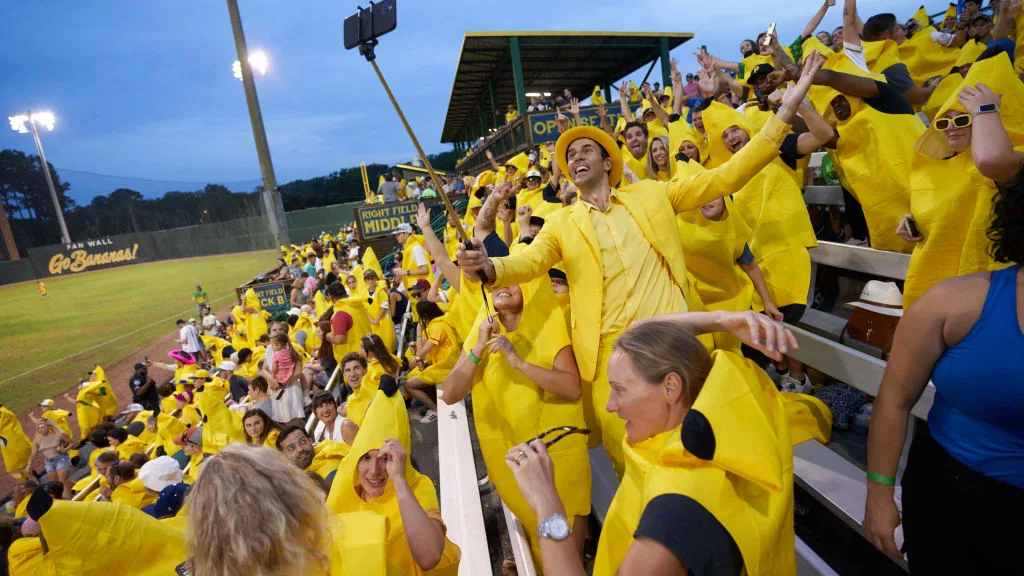
The rule affects both teams equally. Fans should not assume they are helping their favorite club simply because they made a catch; the batter?s team determines who benefits. It also rewards attention in foul territory. Bringing a glove can be practical, but spectators should never climb, interfere with another person or ignore venue safety rules to chase a ball.
Team challenges and the fan challenge
Each team may challenge one eligible ruling by deploying its designated challenge prop before the next pitch. The umpiring crew reviews the play and presents it to the Umpire Field Chief for the ruling. If the challenge succeeds and the call is overturned, the team retains its challenge. If the call stands or the review is inconclusive, the team loses that opportunity for the rest of the game.
The published challenge categories are fair-or-foul calls, force or tag plays, catches in the infield or outfield, and missed-base calls. The challenge system is not an unlimited request to review any decision.
Fans also have one opportunity. Before the game, the crowd selects a representative who can initiate the fan challenge with the event?s confetti-and-sign procedure. It is playful presentation wrapped around a real replay decision. Once used, it is gone regardless of which team the outcome favors.
How the Showdown tiebreaker works
If the game is tied at the end of the two-hour limit, Banana Ball uses a Showdown rather than conventional extra innings. Each side receives its opportunity under the round?s defensive setup. The hitter must score for the team to earn the point available in that round; an out produces a ?Showdown Shutdown.?
- Round 1: pitcher, catcher and one fielder face one hitter.
- Round 2: pitcher and catcher face one hitter, with no extra fielder.
- Round 3: pitcher, catcher and one fielder face a hitter with the bases loaded.
- Later rounds: the bases-loaded, one-fielder setup continues until one team has won.
Rounds 1 and 2 allow up to one point. Round 3 and later rounds allow up to four. If a hitter clears the outfield wall at any point, the home run is an immediate walk-off win.
The current official rules also address ball four. In the first two rounds, a ball-four sprint places a runner at second while the plate appearance can continue with a reset count; the manager may keep or change the hitter. In later bases-loaded rounds, special runner placement and scoring procedures apply. Runners cannot take leads and cannot advance on wild pitches or passed balls during the Showdown. Those details matter because older explainers may describe an earlier version of the tiebreaker.
The simplest way to watch is to focus on the central contest: can the hitter complete the scoring task before the reduced defense records an out? The unusual spacing creates long chases, aggressive turns and direct pitcher-versus-runner pressure.
Golden Batter, trick plays and specialist roles
The Golden Batter
Once per game, a team may send any hitter in its lineup to bat in any spot. That lets a manager choose a preferred hitter for the highest-leverage moment instead of accepting whoever is naturally due. The official examples also explain how the skipped lineup position and baserunner substitution are handled afterward.
The Golden Batter is not a permanent lineup rewrite and does not create unlimited pinch-hitting. It is one strategic use per team per game. Because it can be saved for the final inning, viewers should note whether each club has already used it when evaluating a close finish.
The Trick Play Equalizer Point
A trick play is not simply any dance or flashy movement. The official definition is a routine play performed in a non-routine way that must result in an out. It may happen on the ground, in the air or through a strikeout. A failed attempt may be entertaining, but it does not qualify as a trick-play out under that definition.
The current rules give the visiting team an equalizer opportunity. If the visitors have collected more trick plays than the home team entering the final inning, one point is added to the visiting team?s total. That makes tracked trick-play outs competitively relevant without replacing inning scoring.
Designated runner and designated fielder
Each club may name a designated runner before the game. That runner may enter once during each trip through the batting order and becomes eligible again when the lineup returns to the leadoff spot. A club may also name a designated fielder who can enter defensively at any position without the normal consequence, although using that player to bat or replace someone in the starting lineup ends the special designation.
Banana Ball lineups also include a designated hitter and an extra hitter among ten batting spots. These specialist rules create flexibility for speed, defense and entertainment while keeping defined limits on repeated use.
What first-time viewers should watch
- Read points before runs. Points decide the game; runs explain how an inning was won and become especially important in the last inning.
- Watch the clock. The next inning may never begin after two hours.
- Stay alert on every pitch. A passed ball can send the hitter toward first even before ball four.
- Track the Golden Batter. An unused Golden Batter changes late-game possibilities.
- Notice clean outs, not just style. A trick-play attempt has to produce an out to count under the official definition.
- Look into the seats on foul balls. A fan can complete the out.
For a current event, start with today?s Banana Ball games, confirm the viewing option on where to watch Banana Ball, and return to the scores tool after the status becomes final. The full schedule is the better destination for dates and matchups; this guide is designed to explain what happens once the game begins.
Frequently asked questions
Does Banana Ball always play nine innings?
No. No new inning starts after the two-hour limit, so a game can finish before nine innings. The inning in progress is completed under the applicable final-inning rules.
Do runs or points decide the winner?
Points decide the official game result. Runs determine who wins most individual innings, and every run becomes a point in the final inning. Runs and points should not be used interchangeably.
Does any fan touch make the batter out?
No. The fan must make a clean catch of the foul ball. The official rule rejects bobbles and juggling.
Are Showdowns the same as extra innings?
No. A Showdown is a special tiebreaker with a reduced defense and round-specific scoring tasks. It replaces conventional extra innings after a tie at the time limit.
Can a team use the Golden Batter more than once?
No. Each team has one Golden Batter use per game under the current official rule.
Can Banana Ball rules change?
Yes. Banana Ball has evolved over time, and detailed procedures can be updated. This guide reflects the official rules available on July 29, 2026; viewers should check the official rules page when a later season begins.
Comments
Comments are reviewed before publication. Spam, personal information and abusive content are not published.
Loading comments…