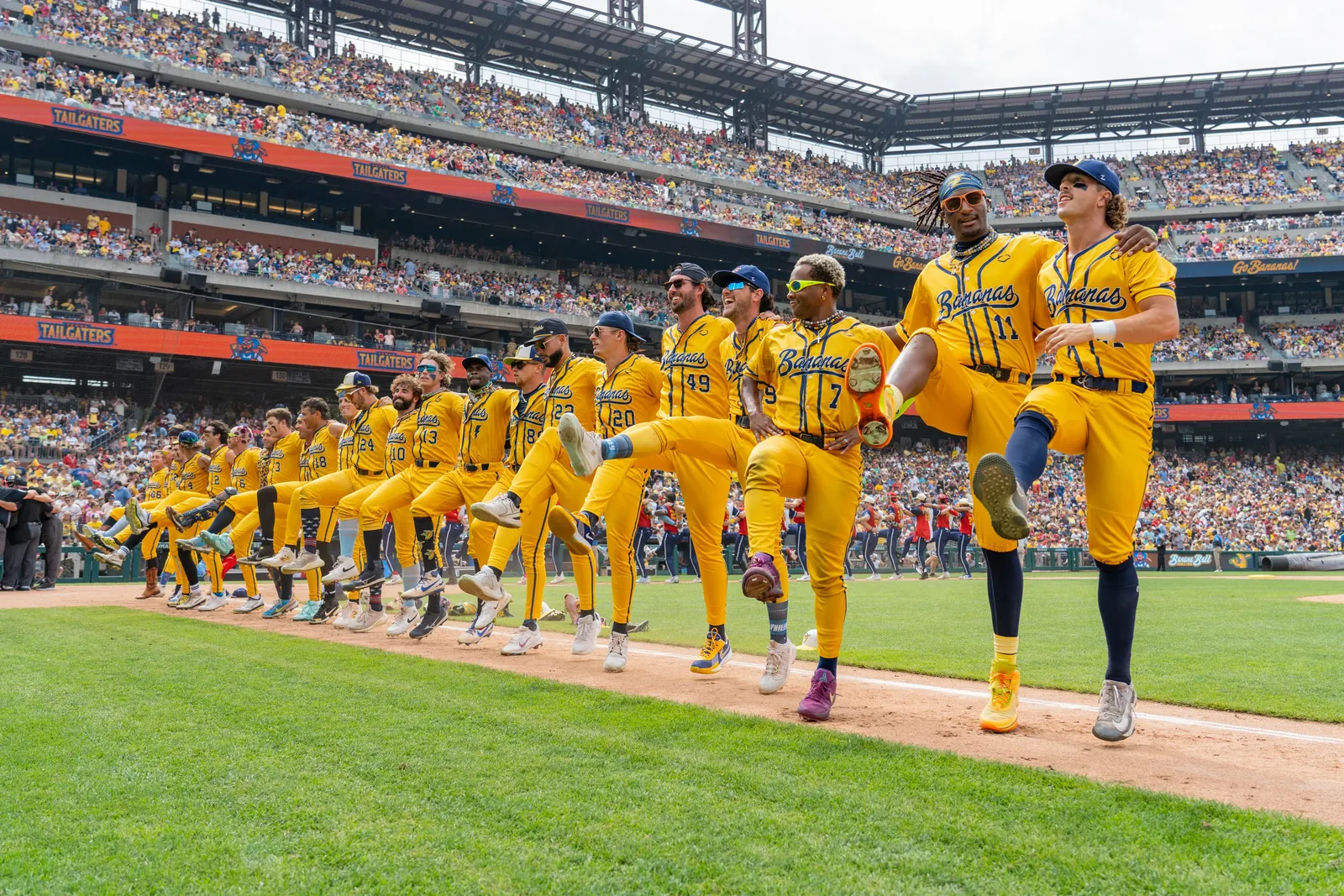
The Savannah Bananas began in 2016, but Banana Ball itself has two later start dates worth knowing. The experimental format was first played at Lander University on November 2, 2018, while the first official Banana Ball game in front of fans took place at Grayson Stadium on June 26, 2020. That is why a quick search can produce three apparently different answers. Each describes a different milestone: the birth of the team, the first test of the altered game, or its public debut. The Bananas then left the Coastal Plain League after the 2022 season to play Banana Ball full time, and the concept eventually grew into a multi-team professional league. This documented timeline separates those stages so you can use the right date?and understand how a risky summer-collegiate club became a touring sport.
The short answer: Banana Ball has three useful start dates
If a quiz asks when the Savannah Bananas were founded, answer 2016. If the question is when the alternative game was invented or first tried, use November 2, 2018. If someone means the first official Banana Ball game presented to fans, the most precise answer is June 26, 2020. Those answers coexist because a team, a rule experiment and a public competition are not the same thing.
| Milestone | Date | What began | Best use of the date |
|---|---|---|---|
| Savannah Bananas identity | February 25, 2016 | The new summer-collegiate club unveiled its name | Questions about when the team started |
| First documented Banana Ball test | November 2, 2018 | An experimental rules game against Lander University | Questions about the format?s invention or earliest game |
| First official game in front of fans | June 26, 2020 | A public Banana Ball scrimmage at Grayson Stadium | Questions about the official debut |
| Full-time Banana Ball era | 2023 season | The Bananas played only their touring format after leaving the CPL | Questions about when Banana Ball replaced regular league play |
The wording matters. The 2018 contest proved that a redesigned version of baseball could be played, but the rules continued evolving. The 2020 event put that concept before paying spectators. Meanwhile, the Savannah Bananas team had already spent several seasons playing conventional summer-league baseball with entertainment around it.
For a one-sentence answer, say: ?The Savannah Bananas started in 2016, tested Banana Ball in 2018, and played the first official fan-facing game in 2020.? That formulation is short enough for ordinary conversation and accurate enough to avoid the most common timeline mistake.
2015-2016: the Savannah Bananas begin in an empty ballpark
The origin story starts with a vacancy, not a new rulebook. Savannah?s longtime minor-league club, the Sand Gnats, left after the 2015 season. Jesse and Emily Cole arrived in October 2015 intending to put a summer-collegiate team into historic Grayson Stadium. Their company name, Fans First Entertainment, stated the operating idea: the evening had to be designed around the spectator, especially in a city that had just lost affiliated baseball.
The plan was financially precarious. The organization?s official account says it had sold only a handful of tickets and overdrawn its bank account by January 2016. The Coles have said they sold their house and emptied savings to continue. A community naming contest then attracted more than 1,000 suggestions. On February 25, 2016, the club revealed the deliberately unusual Savannah Bananas name. National attention and merchandise orders followed, even as some local reactions were hostile.
That summer?s product combined real competition with a scripted entertainment program around it: dancing players, a pep band, promotional characters and crowd participation. It worked commercially. Opening Night on June 2 sold out despite a long rain delay, the inaugural season produced 18 sellouts, and local reporting placed Savannah second in average attendance among 160 summer-collegiate teams. The baseball result was substantial too: the Bananas won the Coastal Plain League?s Petitt Cup in their first season.
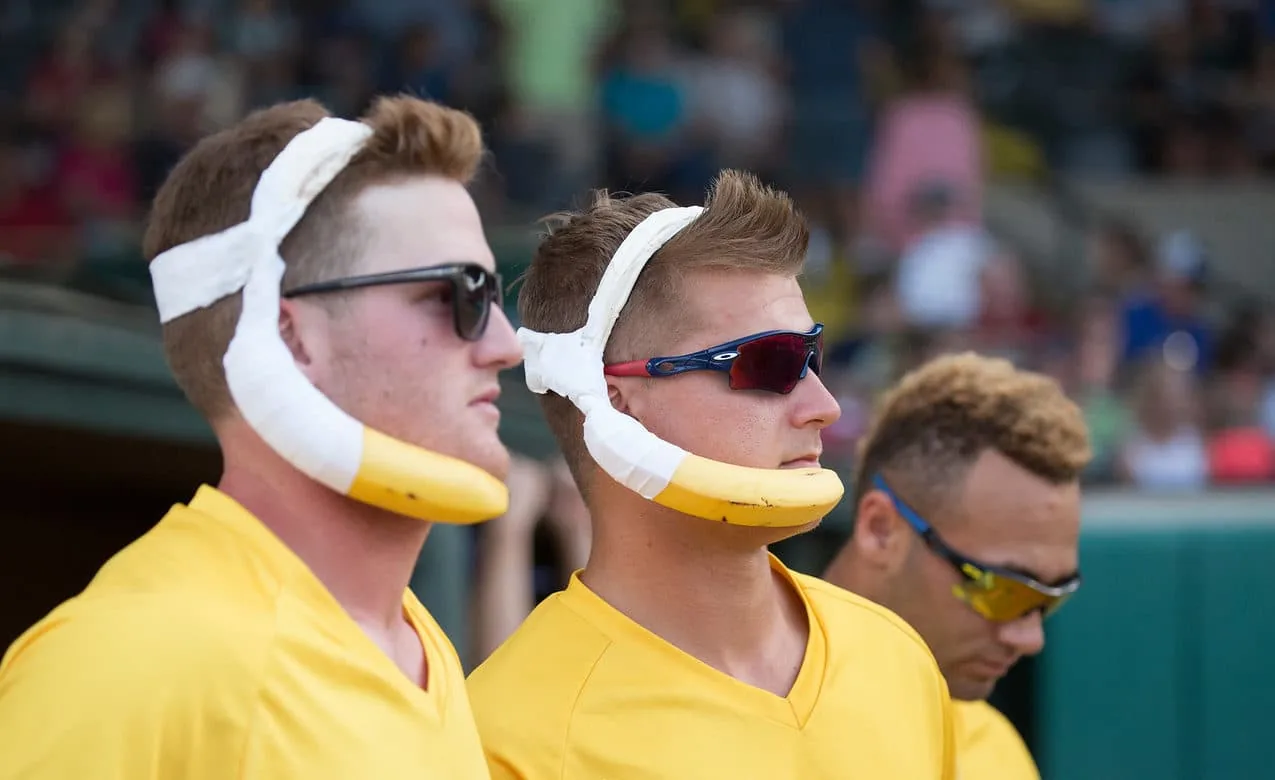
But those games were still governed by the CPL?s conventional baseball framework. The show between pitches was novel; the sport itself had not yet become the points-per-inning, time-limited format recognized today. Calling 2016 ?the beginning of Banana Ball? is understandable in a broad brand-history sense, but it skips an essential development stage.
The more accurate sequence is that a fan-first baseball organization began in 2016. Its early success gave the staff a live laboratory: they could see which moments held attention, which delays drained energy and how much change an audience would accept. Only after operating that laboratory for multiple seasons did the Bananas begin redesigning the game itself.
2018: the first documented Banana Ball experiment
By 2018, the question had moved beyond how to entertain between innings. Jesse Cole and the Bananas staff were asking whether the slow or predictable parts of baseball could be redesigned. Cole?s surviving idea notebooks, later displayed by the National Baseball Hall of Fame, show proposals aimed at constant action: innings carrying point value, hitters staying in the box, mound visits disappearing and a one-on-one tiebreaker concept. These were design hypotheses, not yet a permanent code.
The first attempt was supposed to happen at Wofford College, Cole?s alma mater, but rain canceled that event. The experiment moved to Lander University in Greenwood, South Carolina. Lander identifies November 2, 2018 as the first time Banana Ball was played, with its Bearcats facing the Savannah Bananas in an exhibition. Lander coach Jason Burke recalled that the invitation was specifically to try a faster style of baseball with unusual rules.
Why does that little-known college exhibition matter? A written idea is not a playable sport until athletes test its incentives and timing. A rule that sounds exciting on paper may create confusion, an unfair edge or an unexpected delay. The Lander game let the creators watch those interactions, ask players how the experience felt and decide what to keep changing. Cole has recalled an early test completing nine innings in 99 minutes, evidence that the faster-game objective could work in practice.
It would be misleading, however, to imagine that spectators in 2018 saw the exact product offered today. Rules were added, removed and refined over subsequent seasons. The experiment established the direction?compressed time, inning-level stakes and continuous action?rather than freezing a final rulebook.
That makes 2018 the strongest answer to ?When was Banana Ball invented?? or ?When was Banana Ball first tested?? It is not the cleanest answer to ?When did fans first attend an official Banana Ball game?? The Lander event functioned as a prototype. The public-facing milestone came nearly 20 months later in Savannah, after more development and under extraordinary circumstances.
2020: the first official Banana Ball game reaches fans
The disrupted 2020 baseball season created an unusual opening for the experiment. On June 26, 2020, the Bananas divided their roster into Yellow Bananas and Green Bananas and staged an intrasquad game at Grayson Stadium. Contemporary local coverage called it the first official Banana Ball game, while later interviews with players and coaches sharpened that description: it was the first official game played in front of fans.
That distinction is why June 26 is the best answer when ?start? means a public debut rather than an invention. The Baltimore Banner reported that roughly 1,000 spectators attended. Future major-league pitcher Cade Povich worked one inning for the Yellow side, recording three outs in one minute and 10 seconds. The Green Bananas won, but the more important result was information. Players and spectators were learning an unfamiliar system at the same time.
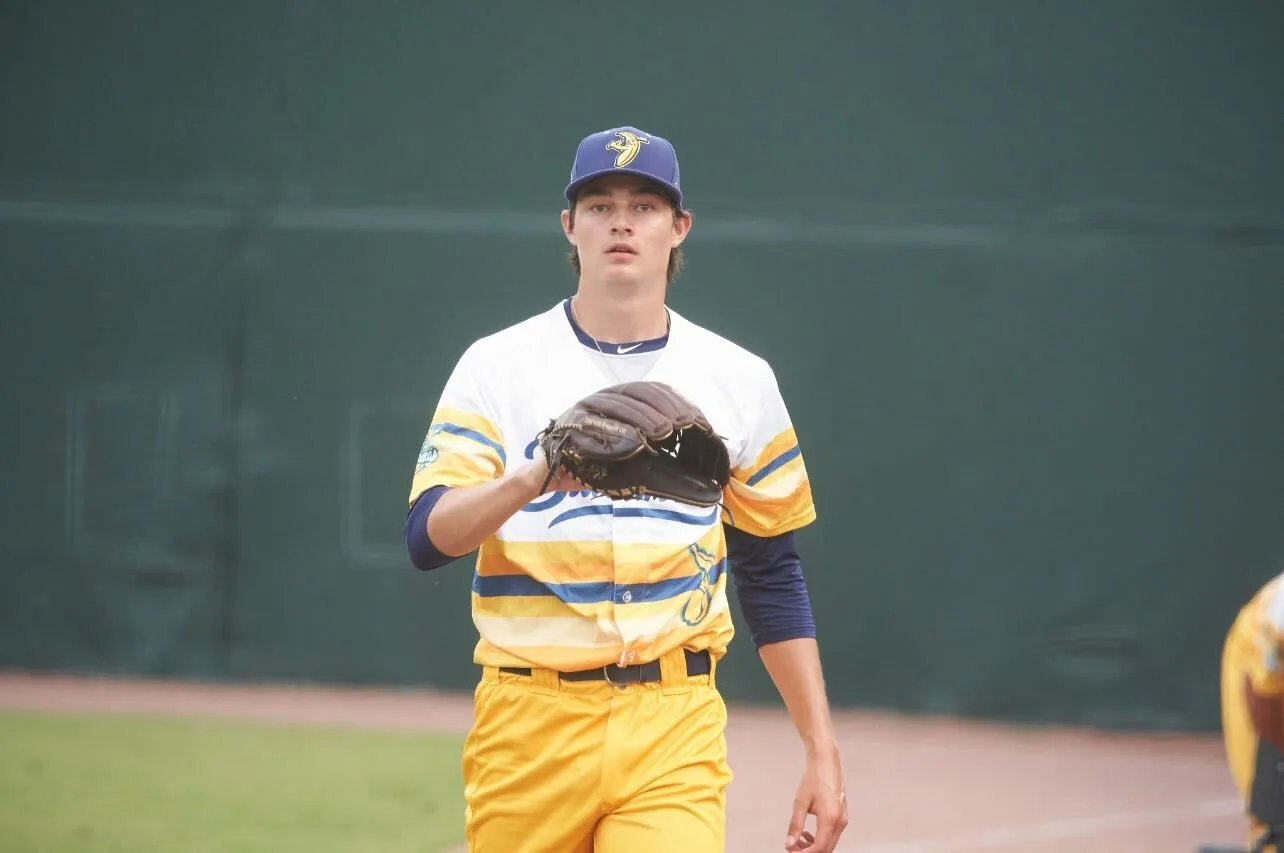
The rough edges were visible. Povich and coach Tyler Gillum later described the 2020 roster as test subjects for rules the organization was still shaping. A ball-four sequence, for example, required defenders to pass the ball around before they could tag the sprinting batter-runner. What looked simple in a notebook could become chaotic in action. That feedback helped determine how explanations, tactics and pacing needed to improve.
One common retelling places the Party Animals in the June 26 game, but the opponent had not yet made its debut. The Party Animals? official history dates their first appearance to July 21, 2020 and says that initial contest used traditional baseball rules; their second game used Banana Ball rules and reached the Showdown tiebreaker. In other words, the format first met a public audience through an internal Yellow-versus-Green test, then gained a distinct rival built to compete within it.
That rival mattered because a repeatable sport needs recognizable sides, genuine stakes and the possibility that either can win. The modern organization has grown well beyond those two identities, and fans can now compare all Banana Ball teams. But the 2020 sequence shows the foundation clearly: first expose the prototype to spectators, then create a recurring competitive relationship around it.
So if a source says Banana Ball ?started in 2020,? it is usually using the public-event definition. That answer does not erase the 2018 Lander experiment. It identifies the moment when the idea stopped being only a private test and began proving itself as something fans could follow.
2021-2023: a test becomes a touring, full-time sport
Banana Ball?s next proof was portability. In 2021 the Bananas and Party Animals staged what they called the One City World Tour: two games in Savannah followed by two in Mobile, Alabama. The deliberately comic name admitted how small the journey was, but selling the road dates showed that the concept could travel beyond Grayson Stadium. The teams split the four games, another useful reminder that the competition was not designed to guarantee a Bananas victory.
The 2022 World Tour expanded into the first multi-city road trip. Georgia Public Broadcasting reported on the tour while emphasizing an easy-to-miss fact: the Savannah organization was still a Coastal Plain League member. Its college players would begin a separate summer schedule under conventional league rules after the professional exhibition group had played Banana Ball dates.
For several years, then, ?the Savannah Bananas? could describe two related but different experiences:
- a summer-collegiate CPL club playing standard baseball while surrounding it with fan-first entertainment; and
- a professional exhibition roster playing the developing Banana Ball format against the Party Animals.
That overlap explains much of the historical confusion. The collegiate side remained highly successful, winning the Petitt Cup in 2016, 2021 and 2022. Those are CPL championships, not Banana Ball titles. At the same time, the touring format was attracting demand that a short summer season and two-track identity could not easily serve. Fans might buy a ?Bananas? ticket without immediately knowing which rule set or roster they would see.
In August 2022, after seven CPL seasons and a third league championship, the organization announced it would leave the Coastal Plain League. The decision did not mean Banana Ball suddenly appeared that day. It meant the experiment had become strong enough to replace the older business and competition model. The original amateur team ended, while the professional touring team became the entire focus.
The 2023 season is therefore the start of full-time Banana Ball for the Savannah Bananas. From then on, every Bananas game belonged to the alternative format rather than the club alternating between it and CPL play. The change also freed the organization to build a much broader national calendar.
For current plans, use the live Banana Ball schedule rather than an old historical tour list; dates, opponents and times can change by season. The tour cities page is the better place to see where the modern game is going. Historically, however, the key sequence is stable: a tiny 2021 road test, a 2022 multi-city tour and a decisive full-time switch in 2023.
2024-2026: Banana Ball grows from a show into the BBCL
Going full time solved one identity problem, but the sport was still associated mainly with a single headline team and its longtime rival. The next stage was to create clubs that could carry their own themes, casts and competitive followings. The Firefighters became the third team and played an inaugural 2024 season. The Texas Tailgaters joined for 2025, adding a fourth active identity with its own headline dates.
That expansion changed what the phrase ?Banana Ball game? could mean. A matchup no longer needed to include the Savannah Bananas. Fans could attend two other teams playing the same core format, and results could build stories beyond one hero-rival pairing. In product terms, Banana Ball was becoming larger than the brand that invented it.
The organization announced the Banana Ball Championship League name in October 2024, according to its current help center. The named league reached its inaugural season in 2026 with six independent professional teams:
- Savannah Bananas
- Party Animals
- Firefighters
- Texas Tailgaters
- Loco Beach Coconuts
- Indianapolis Clowns
The Loco Beach Coconuts and Indianapolis Clowns were the two 2026 additions. All six are fielded by Fans First Entertainment rather than operating as a set of independently owned local franchises in a conventional major-league structure. They tour across the country, and the schedule is not a simple fixed-home-and-away model.
This is why 2026 should not be described as the year Banana Ball began. It is the start of the inaugural six-team BBCL season: a league-structure milestone built on the 2018 experiment, the 2020 public debut and years of touring. The distinction is comparable to separating the invention of a sport from the later establishment of a formal competition around it.
Use the live Banana Ball teams directory for current rosters and identities, and the BBCL standings for the present competitive picture. Those pages can update as the season changes. The historical takeaway is simpler: the Bananas first created a game, then proved it could travel, then demonstrated that multiple teams could carry it.
Why Banana Ball did not appear overnight
Banana Ball looks like a sudden invention when its best moments arrive as short clips. Its history shows the opposite. The organization first learned to produce an entertaining night around conventional baseball. It then observed a deeper problem: even at popular games, parts of the sport could lose spectators? attention. Rule ideas were written down, tried with players, exposed to fans and revised before the organization risked abandoning an already successful league team.
That is a five-layer origin rather than one birthday:
- Brand: the Savannah Bananas gave the fan-first concept a memorable identity in 2016.
- Prototype: the 2018 Lander game tested whether altered rules could produce a faster experience.
- Public product: the June 2020 game introduced spectators and generated real-world feedback.
- Commitment: the post-2022 departure from the CPL made Banana Ball the full-time business and sport.
- Competition system: expansion culminated in the six-team BBCL era in 2026.
The sequence also explains why the entertainment and baseball cannot be cleanly separated. Dancing, music and characters were present before the new rules, but competitive play supplied uncertainty. The rules accelerated action; the show made individual players recognizable; fan participation connected the stands to the outcome. Each element was tested within the experience rather than added in one launch.
University business analyses reasonably describe this as a culture of experimentation, but the timeline supplies the evidence behind that label. The Bananas did not merely promote a finished invention. They changed one layer at a time, learned from confusion and demand, and eventually replaced their original model. When two sources give different start years, first ask which layer each source is dating. In most cases, the apparent disagreement disappears.
Frequently asked questions about Banana Ball?s origins
Was Banana Ball created in 2016?
Not as a distinct rule format. The Savannah Bananas team and name began in 2016, and its fan-first entertainment culture created the conditions for Banana Ball. The documented rules experiment came in 2018, followed by the first official game in front of fans in 2020.
Who invented Banana Ball?
Jesse Cole is commonly identified as Banana Ball?s inventor and principal designer. The fuller story includes the Savannah Bananas staff, coaches and players who tested the ideas, identified problems and refined how the rules worked in real games. It was led by one vision but developed through repeated group feedback.
Where was the first Banana Ball game played?
The first documented experimental game was played at Lander University in Greenwood, South Carolina, on November 2, 2018. The first official game in front of fans was played at Historic Grayson Stadium in Savannah, Georgia, on June 26, 2020.
When did the Party Animals start?
The Party Animals debuted on July 21, 2020. Their own history says that first appearance used traditional baseball rules and that their second game used Banana Ball rules. They then joined the Bananas for the small One City World Tour in 2021.
When did the Savannah Bananas leave regular baseball?
The Bananas announced their Coastal Plain League departure in August 2022 after completing seven summer-collegiate seasons. Starting in 2023, the organization focused on professional, touring Banana Ball full time. Their 2016, 2021 and 2022 Petitt Cups remain CPL achievements.
Ready to see what the format looks like now? Check Banana Ball games today, confirm the current broadcast on the watch guide, or add verified dates from the Banana Ball calendar. Those live tools are the right source for changing schedules; the origin dates above remain the historical guide.
Comments
Comments are reviewed before publication. Spam, personal information and abusive content are not published.
Loading comments…