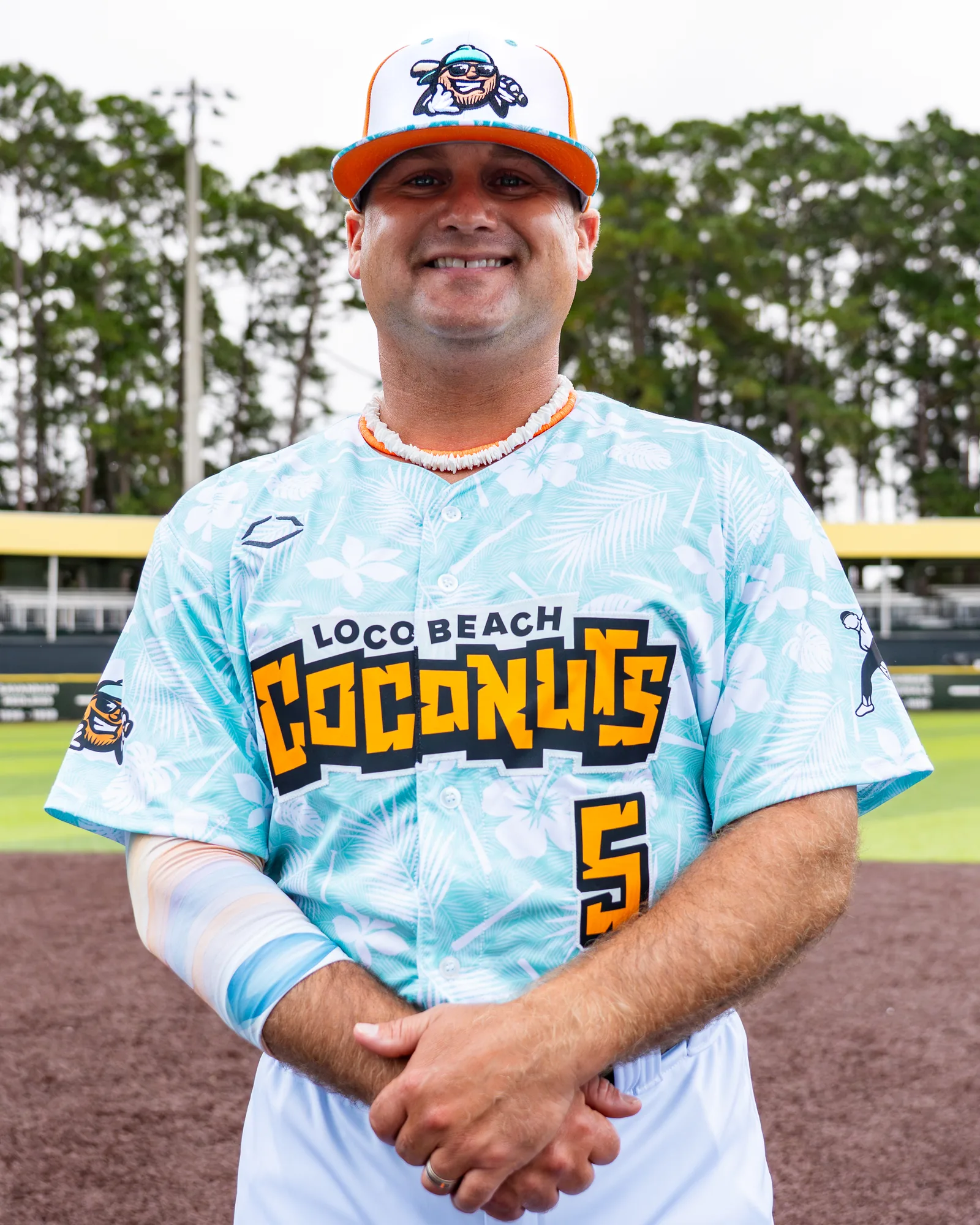
Six teams play in the 2026 Banana Ball Championship League: the Savannah Bananas, Party Animals, Firefighters, Texas Tailgaters, Loco Beach Coconuts, and Indianapolis Clowns. Each has a recognizable primary logo, but caps, jerseys, special collections, and schedule graphics can show alternate artwork. The quickest way to identify a team is to pair its name with the mark shown on the official BBCL team guide, then use our live team directory for its current games and roster. This guide explains the visual cues you can actually see, the documented stories behind the names, and where to check a mark when a product or matchup graphic looks different.
Which six logos belong to the 2026 Banana Ball teams?
The league's official team guide labels a primary image for each of the six clubs. You do not have to decode every line of the artwork to recognize a matchup: start with the full team name, then confirm one or two conspicuous visual cues. The descriptions below come from direct inspection of those labeled images as of September 26, 2026. They describe what is visible; they are not statements about what an artist intended a color or symbol to mean.
| Team | Quick recognition cue in the official primary mark | Check the team |
|---|---|---|
| Savannah Bananas | A yellow, smiling banana character behind a flowing Bananas wordmark, with blue and green accents. | Savannah Bananas page |
| Party Animals | A character wearing pink-accented accessories above a lively Party Animals wordmark. | Party Animals page |
| Firefighters | A firefighter character between two red axes, set above a bold, dark Firefighters wordmark. | Firefighters page |
| Texas Tailgaters | A cowboy-style character and equipment sit above a large blue-and-gold Tailgaters wordmark. | Texas Tailgaters page |
| Loco Beach Coconuts | A sunglasses-wearing character, palm shapes, and a prominent orange-and-teal Coconuts wordmark. | Loco Beach Coconuts page |
| Indianapolis Clowns | A round, dark upper badge with a clown-face design and a large Clowns wordmark beneath it. | Indianapolis Clowns page |
The official 2026 tour schedule PDF offers another practical clue. Its legend uses yellow for Bananas home games, pink for Party Animals, red for Firefighters, orange for Tailgaters, teal for Coconuts, and tan for Clowns. The PDF also says that the logo on the left side is the away team. That instruction belongs to this particular schedule design; a different website or poster may arrange opponents differently. Check the names and the event listing before assuming left always means away.
These are six teams, even if a shop page offers dozens of caps and jerseys. A product colorway or alternate drawing is an expression of a club's identity, not an extra BBCL franchise. The live team directory is the next stop when you need the actual opponent, schedule, or roster instead of an identity guide.
The original identities: Savannah Bananas and Party Animals
The oldest rivalry in this group established a simple visual contrast that still helps when a schedule graphic is crowded. One side is the yellow banana and script-like name; the other is an animal character with pink and black around a sharper wordmark. Those cues are visible in the official primary marks, but the more useful story is how two distinct teams came to share the same traveling show.
Savannah Bananas: the name and visual shorthand
The Bananas' own history dates the public name announcement to February 25, 2016. At the time, the operation was preparing a college summer team in Savannah, not the six-team professional league we know in 2026. The unusual name drew attention before the first season, including coverage of the logo. Contemporary MLB coverage described the fan naming vote and listed Party Animals among the names that did not win. That history explains why the Bananas identity predates the Banana Ball Championship League by years.
On the official team guide's current primary mark, a smiling yellow banana character sits behind the name. The letters are large, curved and easy to pick out even when the rest of the design is small. Blue and green outlines give the yellow shape some separation from a light background. This is a visual description of the present official image, not an assertion that every element was in the 2016 version or that a designer assigned each color a particular meaning.
For a fan reading a crowded event poster, the full "Savannah Bananas" lettering is a more dependable clue than yellow alone. Several Banana Ball products and schedule blocks use bright colors, and other teams can appear on the same tour stop. When the name or character is too small to read, open the Savannah Bananas team page and compare the actual opponent and date. The team's roots at Historic Grayson Stadium are part of its story, but the 2026 tour also takes this identity well beyond Savannah.
Party Animals: a rival identity built for contrast
The Party Animals' official history says Fans First Entertainment created the club to give the Bananas a real rival. It dates their first game against Savannah to July 21, 2020, initially in traditional baseball; another game used Banana Ball rules. The rivals then traveled together in the 2021 One City World Tour. This is an established team identity, rather than a mascot or a one-night opponent invented to decorate a Bananas poster.
The primary mark on the official BBCL guide centers on an expressive animal character, with pink detailing and the team name stretched below it. The Party Animals' own history describes black and pink as their defining look during the 2023 tour. Against the Bananas' yellow character and flowing wordmark, that color and character combination makes the matchup easier to parse at a glance. It is fair to observe the contrast; claiming a documented design brief behind every line would go beyond the sources.
Do not assume a pink cap has to repeat the entire character-and-wordmark design. The official shop lists both an Official Game Hat and an Alternate Game Hat under Party Animals. A cap may use a compact mark that works better on a small front panel. For a game listing, use the team name first and consult the Party Animals team page if you need the current roster or opponent. That keeps a merchandise variation from being mistaken for a separate club.
Firefighters and Texas Tailgaters: themes visible at game time
These two teams make their themes legible well beyond the logo file. The Firefighters' public story is tied to service; the Tailgaters' is tied to a Texas game-day scene. Both also have official game hats and alternate products, which is why the primary image on a league guide is a starting point rather than the only design a spectator will encounter.
Firefighters: service imagery and the team's public mission
On its official About Us page, the Firefighters identify themselves as Banana Ball's third team and date their inaugural season to 2024. That debut season reached seven cities, including a Major League stadium appearance at Nationals Park. The club says it is dedicated to bringing honor to the Firefighters name and notes that leader Valerie Perez is a former firefighter. That is a concrete mission statement from the team, unlike speculation about what an individual line in its logo was meant to represent.
The official primary mark shows a firefighter figure at the top, axes spreading outward and flame-like shapes below a heavy Firefighters wordmark. The red, yellow and dark tones make the shapes visible on a small screen. It is easy to recognize a fire-service theme without treating the image as a literal account of a specific firehouse, person or event. A crest or hat symbol can abbreviate this fuller image, so focus on the team name when checking an opponent.
The official black-and-red game hat is described as the same style players wear on game days. The wider Firefighters hat collection also lists an alternate game hat and a BBFD hat. Those are useful examples of how one team can be represented by a full illustrated mark, a uniform cap design, and a short letter-based mark at the same time. They should all point back to the same Firefighters team page when you need a schedule or roster.
Texas Tailgaters: a regional game-day identity
The official Tailgaters page calls them the league's fourth team and says their first season was 2025. It describes a Lone Star State presentation built around line dancing, parking-lot grilling and a traveling country band. The team's early Texas tour included Frisco, San Antonio and Round Rock. That account gives an actual source for the regional theme; the presence of a cowboy-style figure in the primary logo alone would not establish where, when or why the team was formed.
In the official primary mark, a cowboy-like character sits above the large Tailgaters name. The wordmark uses blue and gold, with a shape that stays recognizable when a matchup graphic reduces the image. The team's full name matters: the 2026 official schedule shows Tailgaters games beyond Texas, so a non-Texas venue does not mean the artwork belongs to a local club. Look up the listed opponent on the Texas Tailgaters team page before relying on a venue assumption.
There is one easy color trap. The league's 2026 schedule PDF uses orange as the Tailgaters' home-game color in its legend, while the primary logo image shown on the official team guide is heavily blue and gold. A schedule color key helps readers follow dates; it is not a rule requiring every cap or logo to be orange. The official shop's cap list includes a cowboy snapback, an alternate game hat and an official game hat for the Tailgaters. Those designs show the same club through different product formats rather than creating different teams.
The 2026 additions: Coconuts and Clowns
The league's last two 2026 identities draw on very different material. The Coconuts use a visible beach theme that can move from venue to venue. The Clowns' name points to a real chapter of Black baseball history. Reading the two marks the same way would flatten that difference, so it helps to separate what the current league says about each from the imagery you can see.
Loco Beach Coconuts: a portable tropical identity
The official Coconuts page identifies the club as the fifth to join the BBCL. It names Mark Crocco as head coach and Shane Victorino as its 2026 Primetime coach. Those are useful anchors for identifying the right team page when a search result shows only "Coconuts," a coach photo, or a piece of beach-themed artwork. The 2026 schedule PDF also gives the Coconuts their own teal-colored home-game entries.
In the primary mark displayed by the official Help Desk, a sunglasses-wearing character appears with palms and a large Coconuts wordmark in orange and teal. The beach cues are immediate; a reader can recognize them even before seeing the full three-word name. Still, do not mistake a palm tree, sunglasses, or a colorful cap for proof of a particular opponent. The team's own page displays separate primary logo, ball artwork and character artwork. Those are related pieces of one identity, and a product may choose one piece without printing the full mark.
The practical test is the same as for an unfamiliar MLB alternate uniform: find the team name on the official matchup listing, then compare it with the Loco Beach Coconuts page. That matters for a touring league, where the venue name is not necessarily a team name. The beach theme travels with the club; it does not tell you that a game must be near a coast.
Indianapolis Clowns: a name with Negro Leagues history
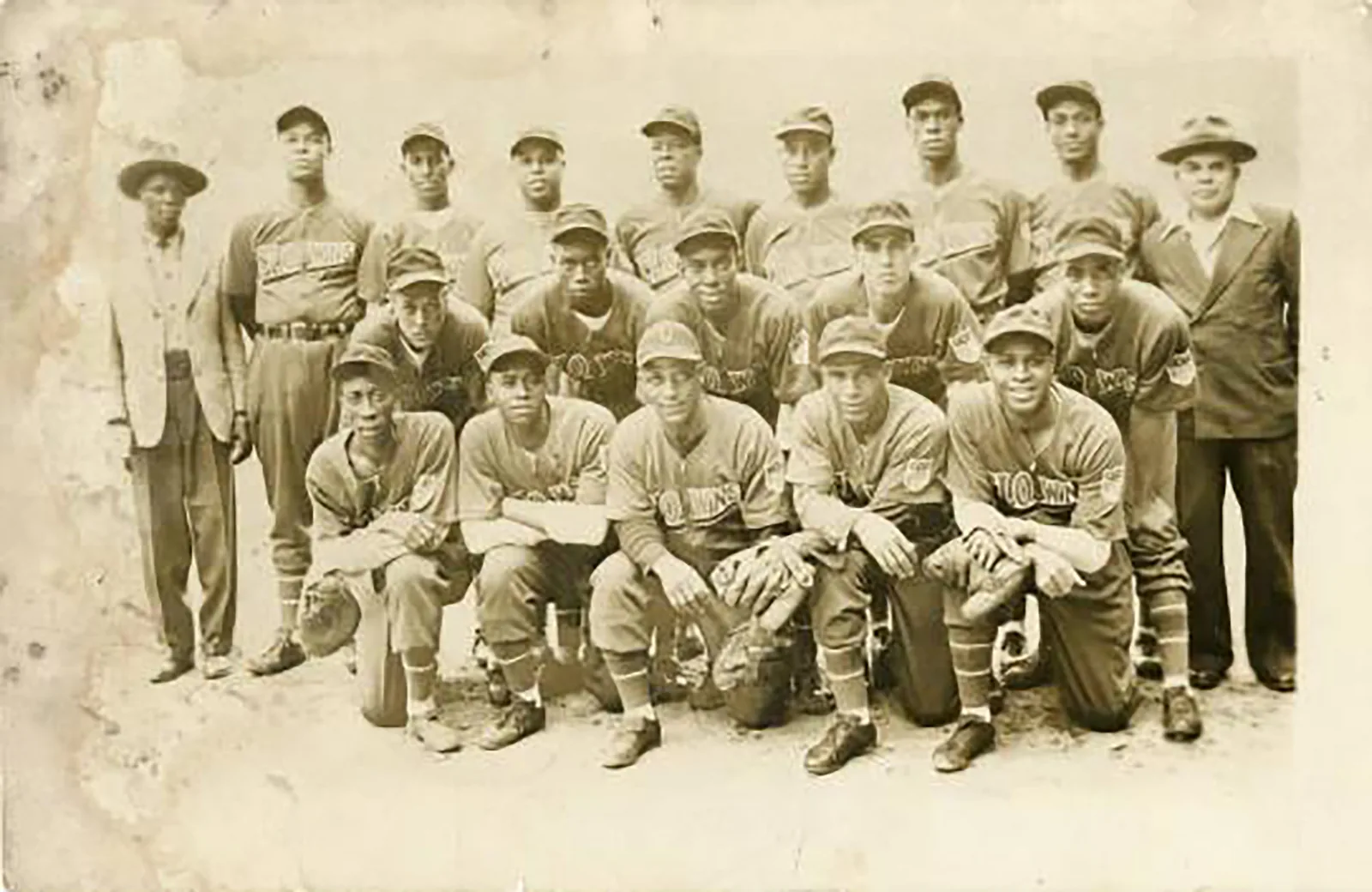
The official Clowns page says the new BBCL team is a tribute to the historic Indianapolis Clowns and that Banana Ball partnered with the Negro Leagues Baseball Museum to preserve and share that history. That is the documented connection. It does not mean today's roster is the same roster, or that a modern logo automatically reproduces every design used by the old club. The 2026 primary mark has a dark round upper badge, a face graphic and a prominent Clowns wordmark. Those visual observations help identify the current club; the history requires separate sources.
MLB's historical account traces the earlier Clowns through barnstorming and the Negro American League, where they combined skilled baseball with showmanship. It records a 1950 league title and names Hank Aaron and Toni Stone among the players associated with the historical team. MLB's Toni Stone profile confirms that she joined the Clowns in 1953 as a regular player in a men's professional league. These are parts of the club's sporting history, not mere background decorations for a novelty logo.
The official page describes head coach Errick Fox and Primetime coach Ryan Howard for the 2026 team. If you see their names in a current roster or event story, you are looking at the contemporary BBCL club. If you see Hank Aaron or Toni Stone, you are reading about the historical Clowns. That distinction protects the real accomplishments of past players and prevents a fan from assuming the two eras share a roster, uniform or exact visual mark. For current opponents and dates, use the Indianapolis Clowns team page; for the earlier team's record, follow the historical sources above.
Why the mark on a cap may differ from a team-page logo
A team-page logo, a cap front and a mascot illustration do different jobs. The full primary image shown on the official BBCL team guide has enough room for a character and wordmark. A cap has a small curved panel, so a team can use an abbreviated symbol. A shirt or special collection can feature still another drawing. The official shop demonstrates this in its product names: the hat catalog lists both Official Game Hats and Alternate Game Hats for several clubs.
The Clowns provide an especially clear example. Their official hat collection includes a cap labeled Primary Logo, one labeled Secondary Logo, and a separate Official Game Hat. All are sold under Indianapolis Clowns. The product labels establish that more than one mark exists; they do not tell us that the same primary/secondary naming scheme applies to every team or that a cap uses the entire logo seen on the Help Desk page.
The official Coconuts page places its primary mark near other pieces of character and ball artwork. A standalone character can appear on merchandise without the full Coconuts lettering. Likewise, a Firefighters hat may abbreviate the theme rather than carrying the axes and complete wordmark visible in the primary image. If your goal is to identify a product or photograph, read its official title and the team name first, then compare the mark. If your goal is to identify a game, prioritize the opponent names on the official event listing. That two-step check is more reliable than deciding by color or a single mascot-like shape.
How to identify a team on a schedule or at the ballpark
The logo is only one part of a reliable game check. The official schedule pairs each event with opponent names, venue, city and date. That matters because the six clubs tour nationally, several may play on the same day, and a venue's city does not necessarily describe either club. Use a mark to orient yourself, then use the event details to confirm you have the right game.
- Match the date and venue. A photo or social post may come from a different stop on the tour. Start with the stadium and calendar date, especially when several matchups share a weekend.
- Read both team names. A Banana Ball event does not automatically include the Savannah Bananas. The official schedule can list Firefighters, Coconuts, Clowns and other pairings on the same day as a Bananas game.
- Use the primary marks as a cross-check. Compare the artwork with the six labeled images on the official BBCL team guide. If a cap or poster shows an abbreviated mark, use its product or event name to resolve it.
- Apply the right graphic's key. The official 2026 PDF explicitly places the away logo on the left and uses color blocks for home-team labels. Do not export that convention to every image online.
- Confirm live details. Open our team directory or full schedule for the current opponent, time and venue. A static identity article should not be your final source for a changed event.
At the ballpark, a player's hat or jersey may carry a simpler symbol than the online primary mark. A printed program or event board naming both clubs gives a better answer than trying to reverse-engineer a small patch from a distance. This is especially helpful when you are choosing a team to follow after your first game: browse the specific team's page for its later stops, rather than assuming its next appearance will be in the same city.
Frequently asked questions about Banana Ball logos
Are there six Banana Ball logos in 2026?
There are six BBCL teams in 2026, and the official team guide shows a labeled primary mark for each one: Savannah Bananas, Party Animals, Firefighters, Texas Tailgaters, Loco Beach Coconuts and Indianapolis Clowns. That does not mean only six logo images exist. The official shop sells alternate cap and apparel designs for several clubs. Count teams by the official lineup, not by the number of different graphics you find online.
Is the Indianapolis Clowns logo connected to the original team?
The connection the organization explicitly documents is a 2026 tribute to the historic Indianapolis Clowns, made in partnership with the Negro Leagues Baseball Museum. The original Clowns were a real Negro Leagues and barnstorming club, as MLB's historical profile explains. The modern badge identifies a current Banana Ball team. The available official statements do not establish that every part of today's drawing duplicates a particular historic logo, so the history and present mark should be described separately.
Where can I see the latest official team logos?
Use the Banana Ball Help Desk's six-team guide for the labeled primary images. Use the official merchandise shop when you are trying to identify a cap, because it names game and alternate styles. Use the official event schedule when the real question is which two teams play at a specific venue. Our team directory then gives you a route to each club's changing schedule and results.
Comments
Comments are reviewed before publication. Spam, personal information and abusive content are not published.
Loading comments…