Banana Ball's six BBCL teams have distinct uniforms, but color alone is not enough to identify them. The Bananas' yellow, the Party Animals' bright accents, the Firefighters' flames, the Tailgaters' denim look, the Coconuts' tropical palette and the Clowns' baseball-history references all become more useful when you can see the team lettering, cap and pants together. This guide uses real team photographs reviewed in November 2026 to explain those combinations. It also shows how to handle an unfamiliar outfit, why a schedule legend is not a clothing specification, and how a retail jersey differs from a complete playing uniform. The examples identify actual photographed looks; they do not promise the same outfit for every future game.
A quick way to identify the six Banana Ball uniforms
Read the team identity first, then use the outfit to confirm it. Banana Ball's six BBCL clubs share a competition, but they do not share one interchangeable identity. A social clip may show only a cap, a shirt or a pair of pants; the game listing supplies the names that a tight crop can hide. Start with the lettering you can actually see, then compare the full look with the named team.
| Team | Identity to confirm | Useful distinction |
|---|---|---|
| Savannah Bananas | Bananas name and recognizable banana branding | The league's best-known team is not present at every game. |
| Party Animals | Party Animals name and animal branding | A distinct rival, not another Bananas uniform. |
| Firefighters | Firefighters name and service-themed presentation | Entrance clothing and playing clothing can serve different purposes. |
| Texas Tailgaters | Tailgaters name and Texas/tailgate styling | A denim-themed look needs more than a schedule color to describe it. |
| Loco Beach Coconuts | Coconuts identity and beach styling | The tropical theme is a club identity, not a venue label. |
| Indianapolis Clowns | Clowns identity and historic-baseball references | A modern revival should not be confused with an undated historic team photo. |
Think of the uniform as a combination. The jersey may carry the full name, the cap may use a smaller mark, and the pants can change how the whole outfit reads from a distance. None of those pieces should overrule a clear team name on the actual matchup. A spectator wearing a retail shirt in the background is an especially weak clue to which side a player represents.
The six-team directory is the quickest way to confirm the clubs and open their schedules. If the question is about a particular symbol, the Banana Ball logo guide examines those marks in more detail. Here, the photographs and comparisons concentrate on what the players wear together.
Use the descriptions as recognition aids rather than a promise of one outfit for every date. An alternate jersey, special appearance or older photograph can change the immediate impression. Identifying the club correctly is the first step; dating the exact look is a separate task.
Savannah Bananas and Party Animals: the familiar contrast
The Bananas look goes beyond one yellow jersey
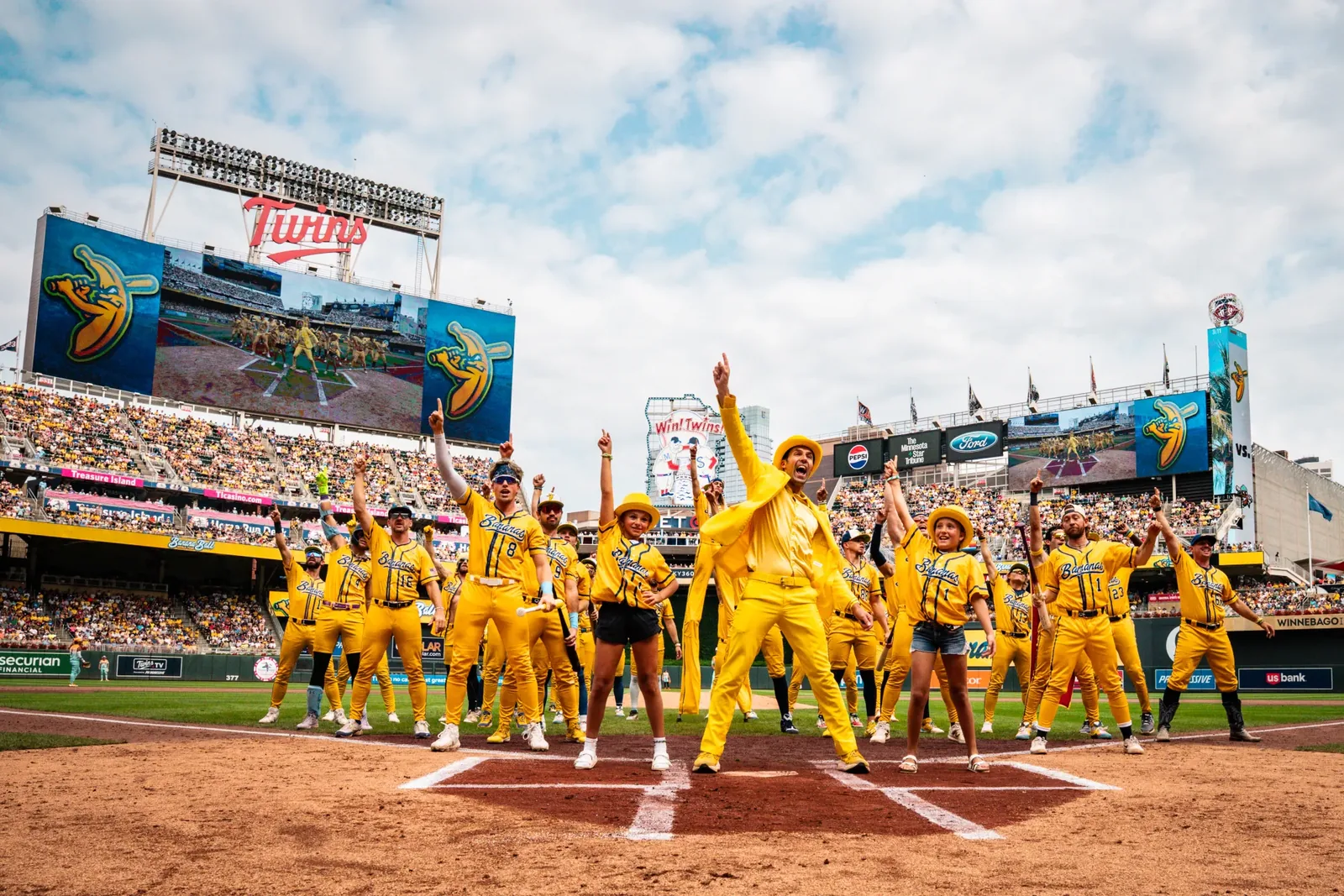
The Bananas' yellow is an immediately useful clue, but look at how the pieces work together. In the cover photograph, players wear yellow jerseys and pants with dark vertical detailing, readable Bananas script and matching baseball caps. The outfit remains recognizable from a distance because the lettering, trim and overall color arrangement reinforce one another.
The same image contains Jesse Cole in a yellow suit and young participants joining the on-field presentation. They demonstrate the limit of a color-only identification: wearing yellow does not make every person a rostered player. When trying to identify someone, inspect the baseball garment, number and context rather than treating the entire formation as a lineup.
A separate retail jersey can also look different from this photographed combination. The team's official shop carries designs for different audiences and uses. To check the actual club and its games, use the Savannah Bananas page; to reproduce one particular look, begin with a dated full-body photograph.
Party Animals pink, black and alternate looks
The Party Animals offer a particularly good demonstration of why two colors are shorthand, not a complete description. In the photograph below, the player's uniform has a black base, a pink number and sleeve detail, bright green accents and a turquoise belt. The team flag makes the identity unambiguous even though we are looking at the back of the jersey.
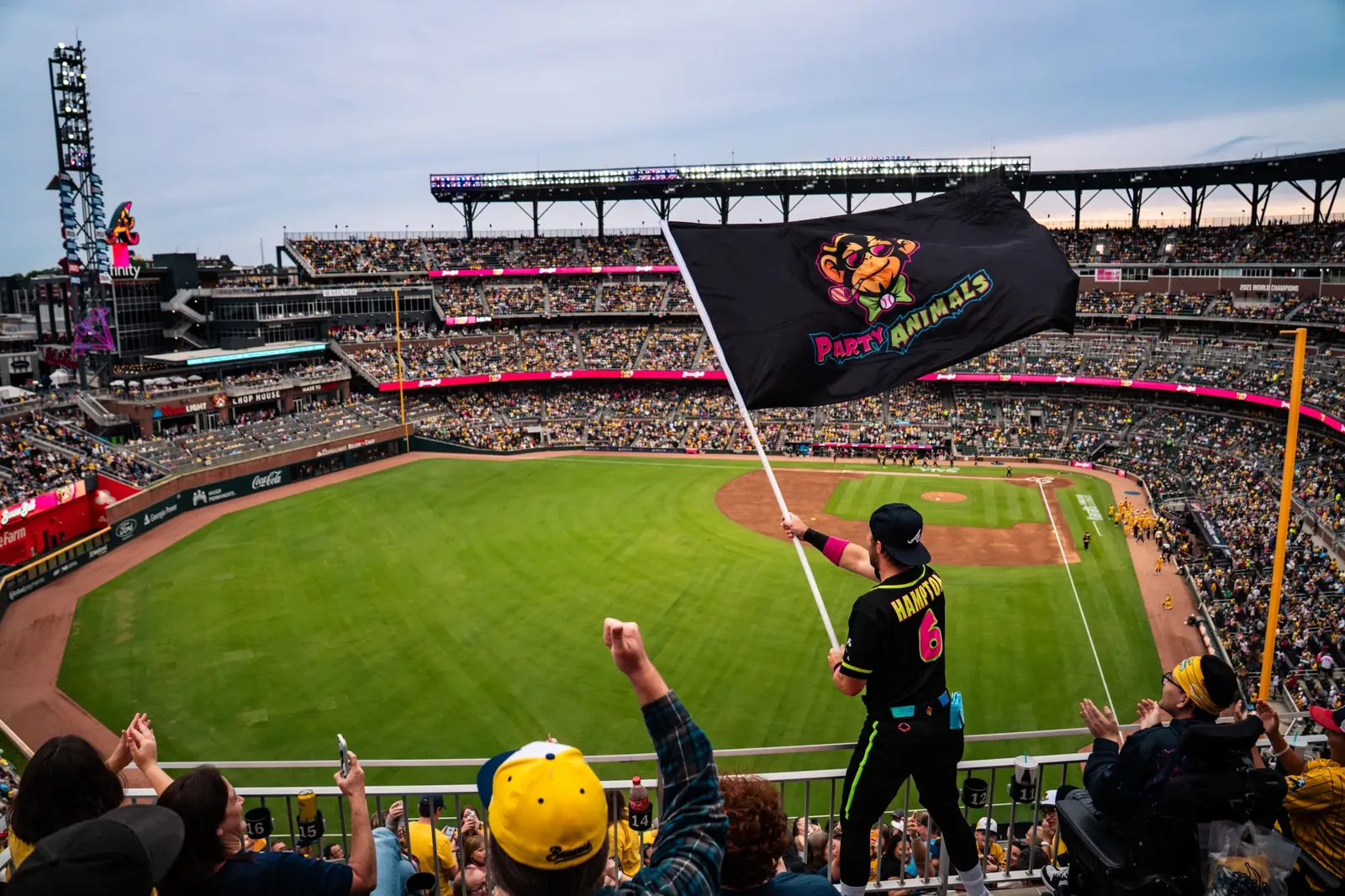
Calling that simply “the pink team” misses useful detail. A dark photo could hide the bright sleeves; a crop might show only the belt or pants. Read the name or recognizable team mark before letting one accent color decide the answer. The Party Animals schedule can confirm whether they were part of the matchup you are trying to identify.
Alternate products and special looks are another reason to keep the whole combination in view. A different color does not automatically mean a new opponent, and a product bearing the team name does not prove it was worn in the game shown in a social clip. Match the exact photograph and date before assigning a uniform to a season.
Firefighters: a service theme carried onto the field
The Firefighters' name is built into the clothing rather than left to a small badge. This real gallery photograph shows orange-red jerseys and pants with yellow flame graphics, dark chest panels and prominent FIREFIGHTERS lettering. Dark caps help frame the bright combination. The flames are particularly useful when part of the name disappears behind a player's arm or a celebration.
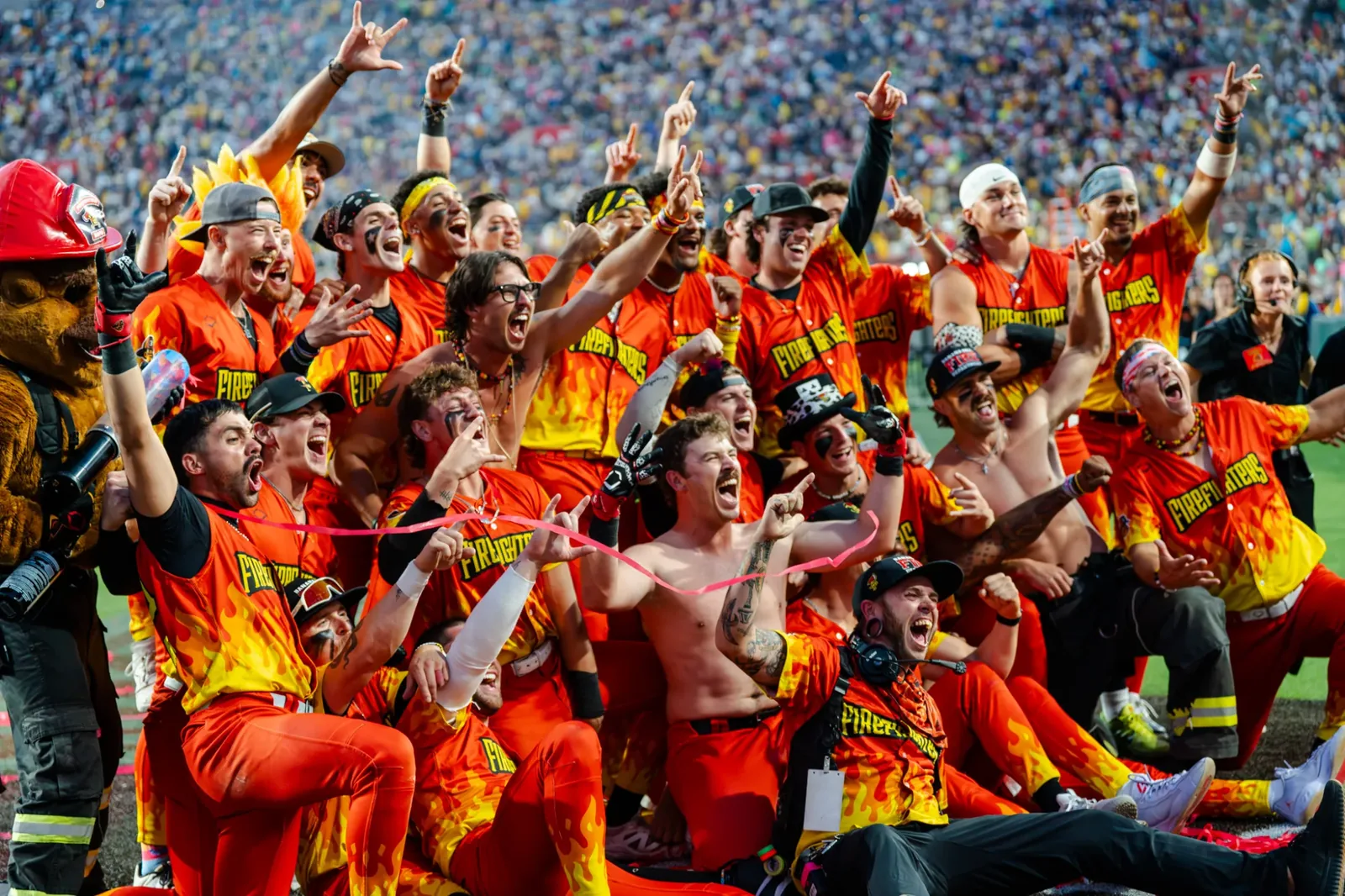
Notice how the pants contribute to the effect. A cropped picture of an orange sleeve could belong to many sports teams; the repeated flame treatment and readable team name make this full group photograph much easier to place. The picture is also a specific example, not an exhaustive catalog of every Firefighters jersey or cap.
The team's public introduction connects its identity with fire-truck entrances, ladders and service. It names former firefighter Val Perez as a leader. That gives the presentation a real organizational context, but it does not mean every player is a career firefighter, nor that a costume worn for an entrance is protective equipment intended for a real emergency.
Separate those categories when looking for an outfit. A helmet used in the show, a mascot's clothing, a baseball jersey and a fan's replica can all express the same theme while serving different purposes. The celebration photograph includes varied presentation details; it should not be read as proof that everyone wears identical equipment throughout a game.
For a clip that is harder to identify, find the Firefighters lettering and compare the official opponent listing. The Firefighters team page provides that game context. If you are shopping for the look, use the team's actual merchandise listing rather than assuming any red fire-themed baseball shirt matches this photograph. A recognizable visual theme is useful evidence of identity, but it is not a fabric specification, safety rating or promise about the outfit for a future date.
Texas Tailgaters: the denim look is part of the identity
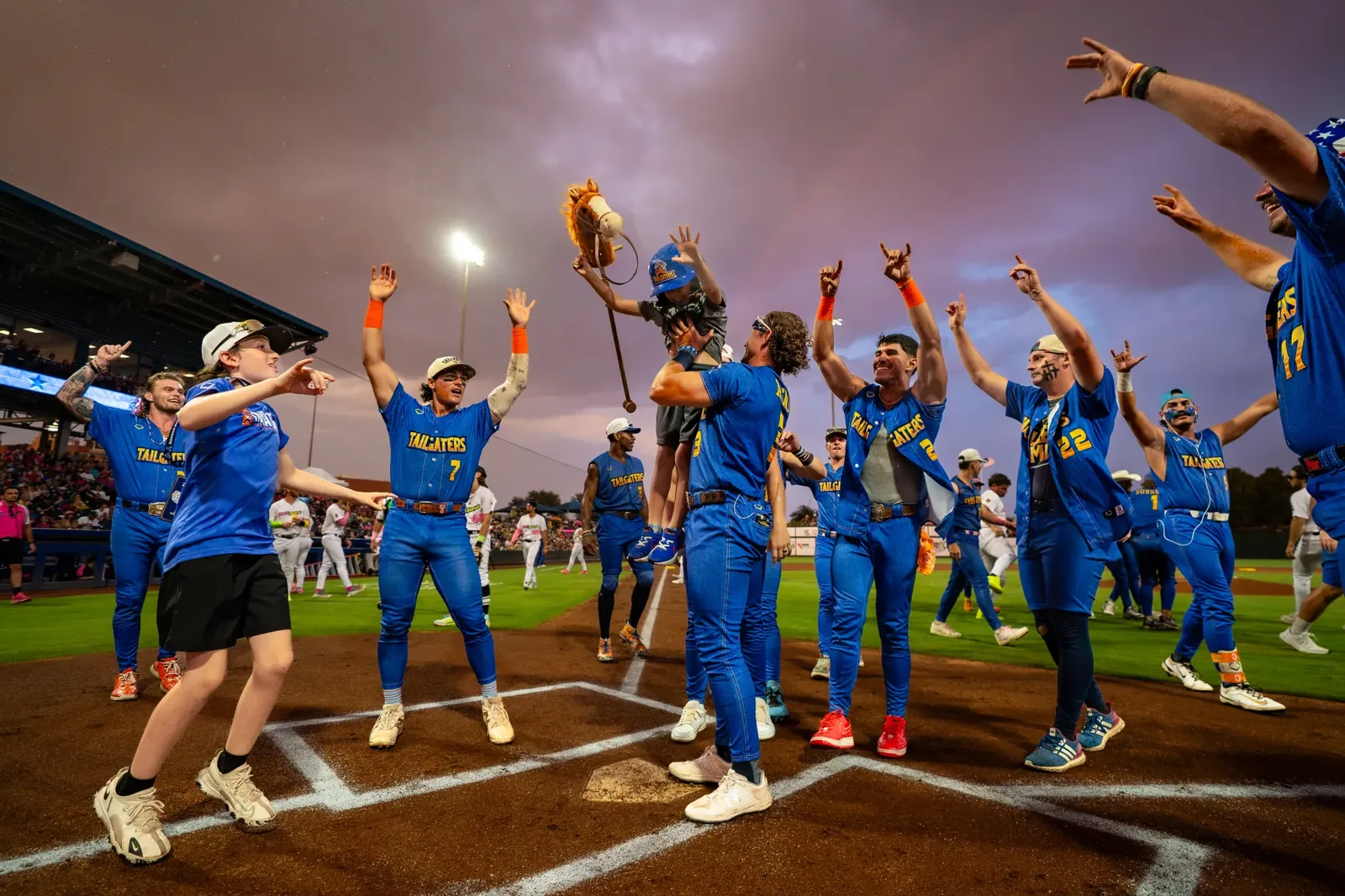
The Texas Tailgaters are the easiest team here to misread if you memorize a schedule color and stop looking. Their blue denim-look combination is a much stronger visual cue in this photograph: the jersey and pants share the effect, with yellow TAILGATERS lettering, yellow numbers and contrasting light stitching. Pocket outlines and belts make the pants an important part of the identity.
This is not a connection invented by fans after seeing a blue shirt. The team's own introduction links the Tailgaters to country music, line dancing and Texas-style pregame entertainment; its merchandise section explicitly promotes denim gear. The visual theme fits that broader presentation. You can recognize the relationship without claiming that every detail was created to symbolize a particular Texas tradition.
Be precise about what the photograph proves. It shows a denim-styled appearance and visible clothing details. It does not reveal a fabric blend, manufacturing process or performance specification. Likewise, an official retail item called a denim jersey is evidence of a named product, not a promise that it includes matching pants or duplicates every feature of a player's garment.
From a distance, look for the yellow team name against the blue base, then check the whole outfit. A spectator in ordinary jeans or a plain blue shirt is not wearing the same combined baseball look. In this group scene, young participants join the players, which is another reason to identify the uniform rather than assume every person is part of the roster.
If an event graphic uses a different color for the Tailgaters' game block, the team has not changed. The graphic's legend describes the graphic; the real photo describes a worn outfit. Open the Texas Tailgaters team page to settle the opponent and date, then use the garment's lettering and details to identify the version you are looking at. That method works better than forcing a complex uniform into a single color label.
Loco Beach Coconuts and Indianapolis Clowns: two different new looks
Coconuts beach styling
The Coconuts and modern Clowns joined the six-team playing landscape in 2026, but their outfits give very different first impressions. In this Coconuts photograph, the jerseys and pants use a light mint/aqua palette with a subtle vertical stripe pattern. Yellow lettering outlined against the pale shirt makes COCONUTS readable, while white caps keep the overall look bright.
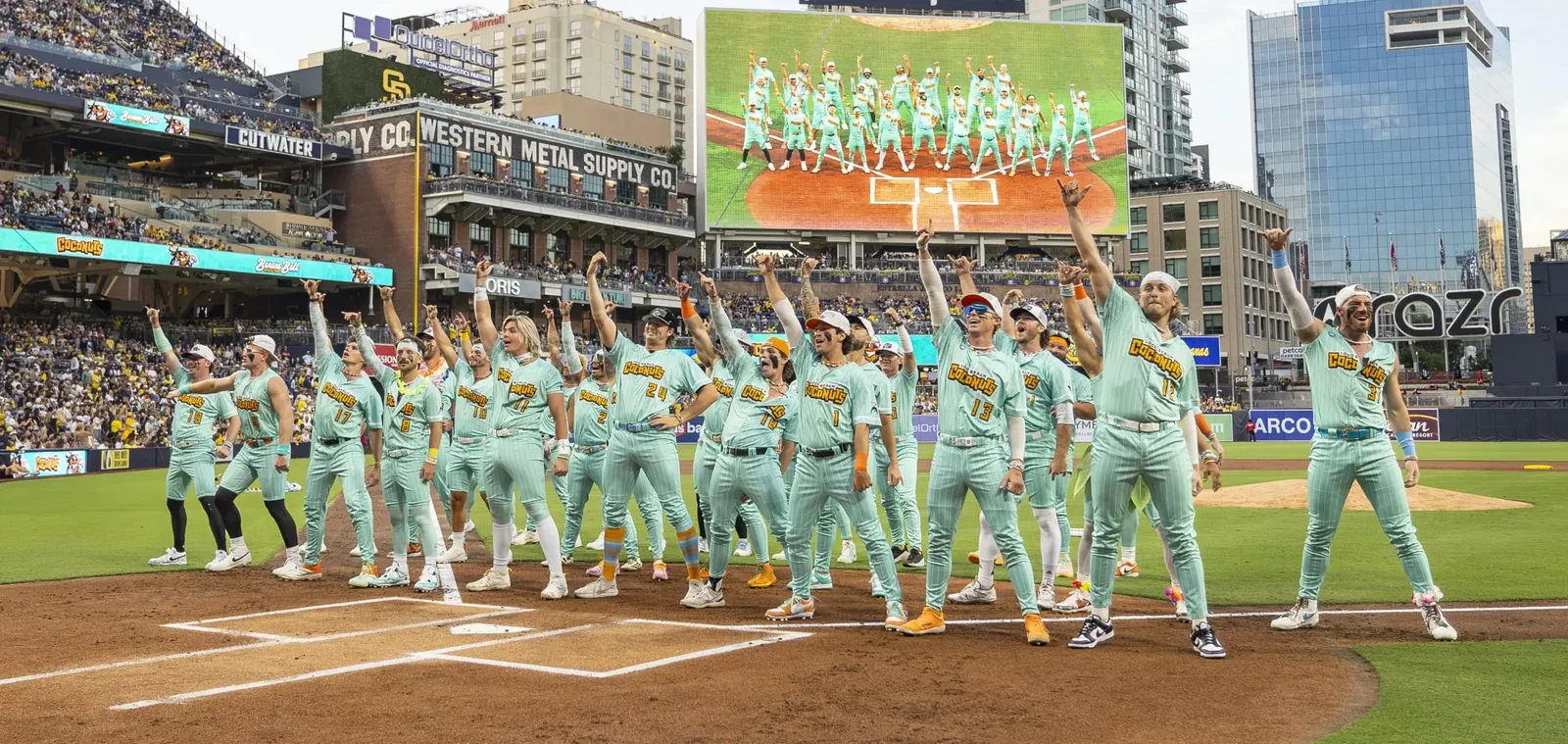
The beach connection comes from the club's own identity. Its introduction describes a tropical state of mind and explains that Loco Beach is not a real place. The uniform can communicate that theme without telling you where a particular game is being played. Do not identify a stadium or a team's permanent base from a beach-colored shirt.
From a distant seat or in a quick clip, the light base and team wordmark are useful together. Up close, notice the pattern, trim and different pant lengths. Those small variations are part of the actual photographed scene, not evidence that every player must wear the same length or that the next season will use precisely this combination. Check the Coconuts team page when you need the matchup rather than the look.
Clowns and the visual connection to baseball history
The modern Clowns photograph offers a darker contrast: blue/navy jerseys, orange outlined lettering and numbers, sleeve striping and varied pants and footwear. The readable CLOWNS name is the clearest starting point. A shirtless performer or a novelty accessory in the same scene should not distract you into treating the entire presentation as one standard uniform.
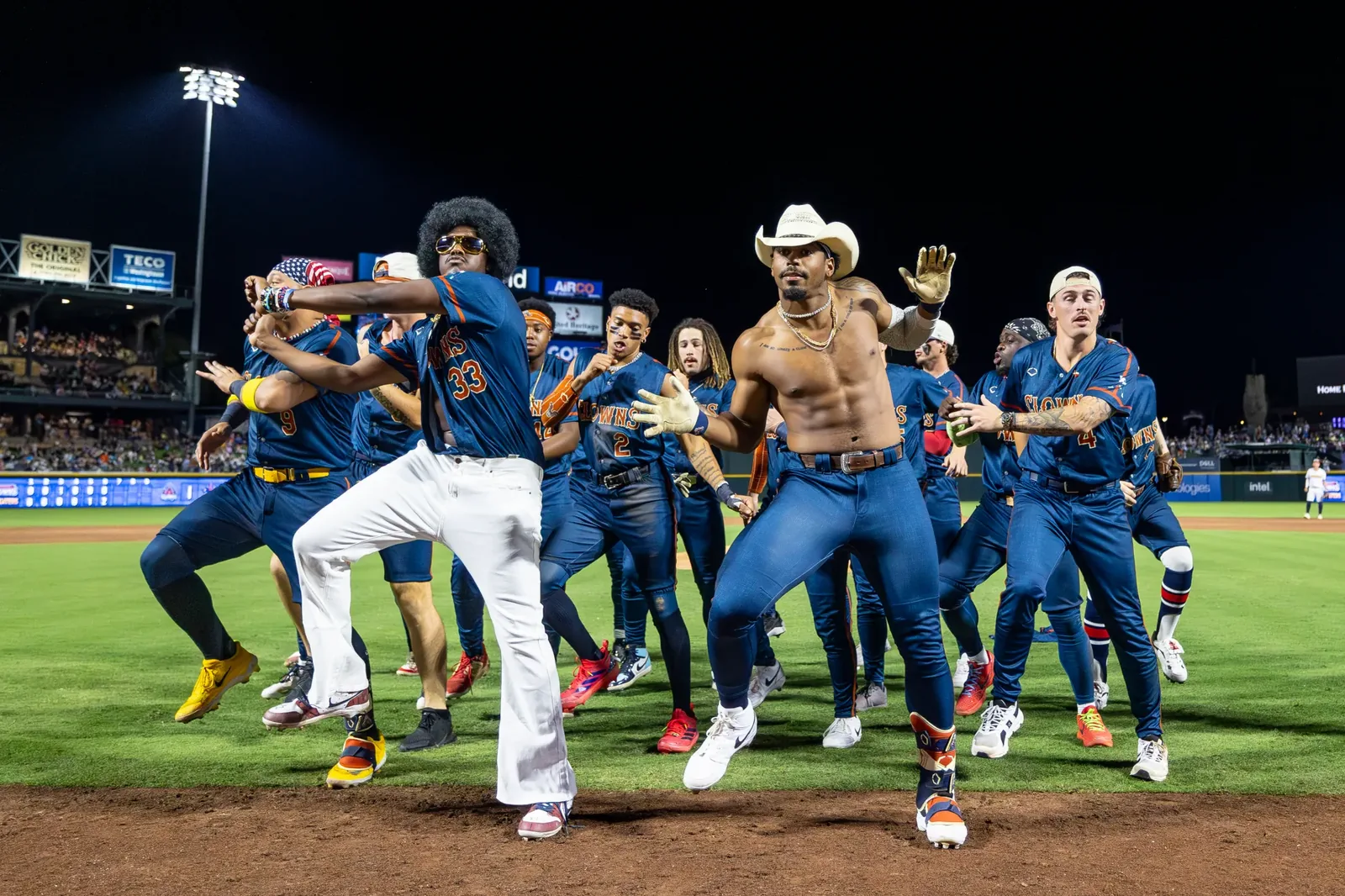
The club describes its 2026 revival as a tribute to the historic Indianapolis Clowns and barnstorming baseball. That connection matters, but it does not make this image an archival Negro Leagues photograph or prove that the modern outfit exactly reproduces a particular historical season. Keep the modern players, the older team and the revived identity distinct.
For the visual question, start with the named modern club and the complete outfit. For the older story, our Indianapolis Clowns history guide provides the appropriate context. That division lets you appreciate the references without turning a contemporary celebration photo into evidence of a uniform worn decades ago.
A special uniform does not create another Banana Ball team
Use the whole image, date and matchup
The official directory still identifies six BBCL clubs even though the shop offers many more jersey and cap designs. Keep those two counts separate. A new retail color, a special outfit or a different piece of headwear can be an expression of the same team. A cropped social video is rarely enough information to establish which version you are seeing.
Use a short identification process when the clothing looks unfamiliar:
- Find readable lettering or a recognizable team mark on the actual player.
- Open the original post and read its caption rather than relying on a repost's title.
- Look for an established event date and check the named matchup.
- Compare a wider view of the jersey, cap and pants before naming an exact uniform version.
The date deserves particular care. An upload can appear after the game, and an account can share older footage again. A crowd, stadium backdrop or opponent can help, but they should support the identification rather than replace a reliable event description. If the original caption does not establish a date, do not add one simply because a filename or repost seems suggestive.
The Banana Ball video collection can help you find more context than a few seconds of a celebration. A wider shot may reveal the team name that was hidden, or show why presentation clothing looked different from the players' baseball garments. The Firefighters group and Tailgaters scene above both include details that a close crop would lose.
Finally, read a schedule legend on its own terms. Its colors organize that particular chart; they do not function as an equipment rulebook. Confirming a club and identifying its exact outfit are related tasks, but the first can be settled even when the second remains uncertain. You can accurately name the team without inventing a uniform release date or a promise that the look will return next season.
Getting the look without confusing replica and playing kit
Read what the actual product promises
A fan jersey can express exactly the team identity you want without being the garment a player wore in a photograph. Read the specific item's title and description: team, design, audience, garment and any stated material. Do not let a styled product image silently turn a single jersey into a complete uniform with pants, cap and accessories included.
The official Tailgaters denim-named jersey is a useful example. Its retail description lists polyester. The word “denim” communicates the look, while the material description answers a different question. Neither tells you the fabric of every player's pants. The official black Party Animals jersey likewise has its own material and fit description; details from that listing should not be applied to every Party Animals design.
Youth garments are also separately labeled products in the official store. A child-sized replica is not established simply by choosing the smallest adult option. Check the actual youth listing if that is the garment you need, and compare its design with your reference rather than assuming every available cut has identical details.
Choose a useful reference photo before shopping
If your goal is to resemble a particular on-field outfit, choose a picture that shows the whole combination. Note the team name, jersey base, trim, lettering, pants and cap. Then compare the individual product you are considering with that reference. A familiar team logo on the right color is not necessarily the same design.
It is equally reasonable to want one comfortable piece of team clothing instead of a close reproduction. Decide that first, and you can avoid treating every accessory in a performance photo as something you need to buy. Owning a team jersey also does not establish that it is game-used or signed; those are separate claims requiring their own description.
For broader purchasing, sizing and store questions, use the Savannah Bananas merchandise guide. Use this article's real photographs for the visual task: identify the team, understand the complete outfit and choose which details matter to you. That keeps a clear connection between the club you follow, the look you remember and the actual garment you select.
Comments
Comments are reviewed before publication. Spam, personal information and abusive content are not published.
Loading comments…