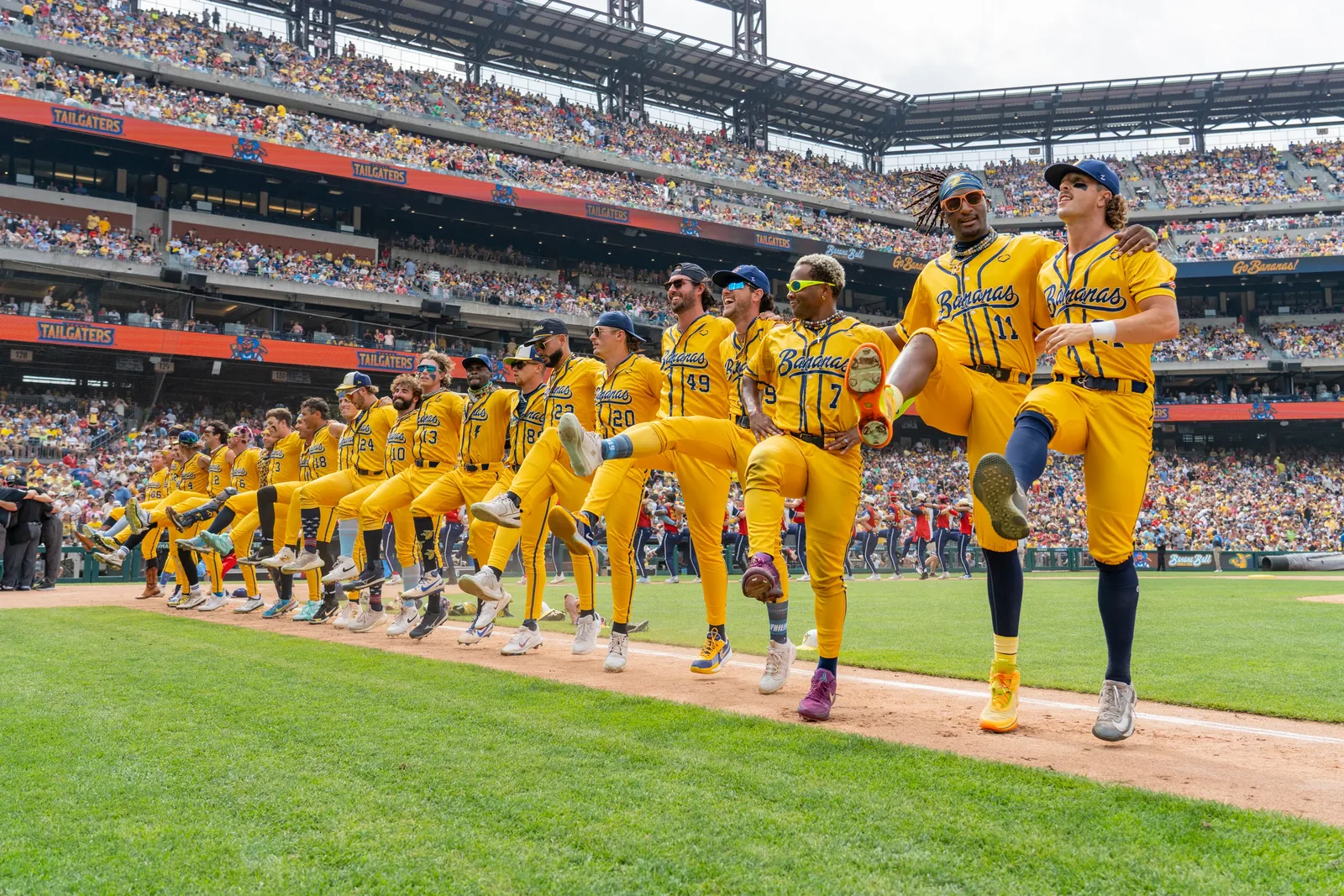
Yes?some former Savannah Bananas players have been drafted and some have reached Major League Baseball, but that answer needs an important date label. From 2016 through 2022, Savannah fielded a summer-collegiate team in the Coastal Plain League. Those players were college prospects using wood-bat summer baseball as one stop on a conventional amateur-to-professional path. The organization then left the CPL and committed to year-round Banana Ball, eventually building today?s independent professional Banana Ball Championship League.
That means a headline about a ?former Banana? may describe a player from the old collegiate club, not somebody promoted out of the modern BBCL. The current league is not an MLB affiliate or an established feeder system. This guide separates those eras, verifies notable MLB examples, and shows how to check future claims without confusing being drafted, playing in the minors, and actually appearing in the majors.
The short answer: yes, but ?Bananas player? can mean two different things
The Savannah Bananas name has stayed constant while the baseball structure around it changed. That is the source of most confusion. The organization?s history says Savannah played seven seasons in the Coastal Plain League before leaving in 2022 to make Banana Ball a year-round operation. Its present-day competition is the Banana Ball Championship League, whose inaugural 2026 season features six current BBCL teams.
| Question | 2016-2022 Savannah Bananas | Modern Banana Ball and 2026 BBCL |
|---|---|---|
| Competition | Coastal Plain League | Banana Ball Championship League |
| Player setting | Summer-collegiate baseball | Independent professional teams |
| Main career context | College prospects played summer baseball, then returned to school or entered the draft process | Players are hired to compete and perform in a touring, entertainment-first version of baseball |
| What an MLB outcome proves | A former college-summer player later advanced through the conventional draft and affiliated-minor-league system | Nothing automatic; any future signing would be an individual transaction, not a league promotion |
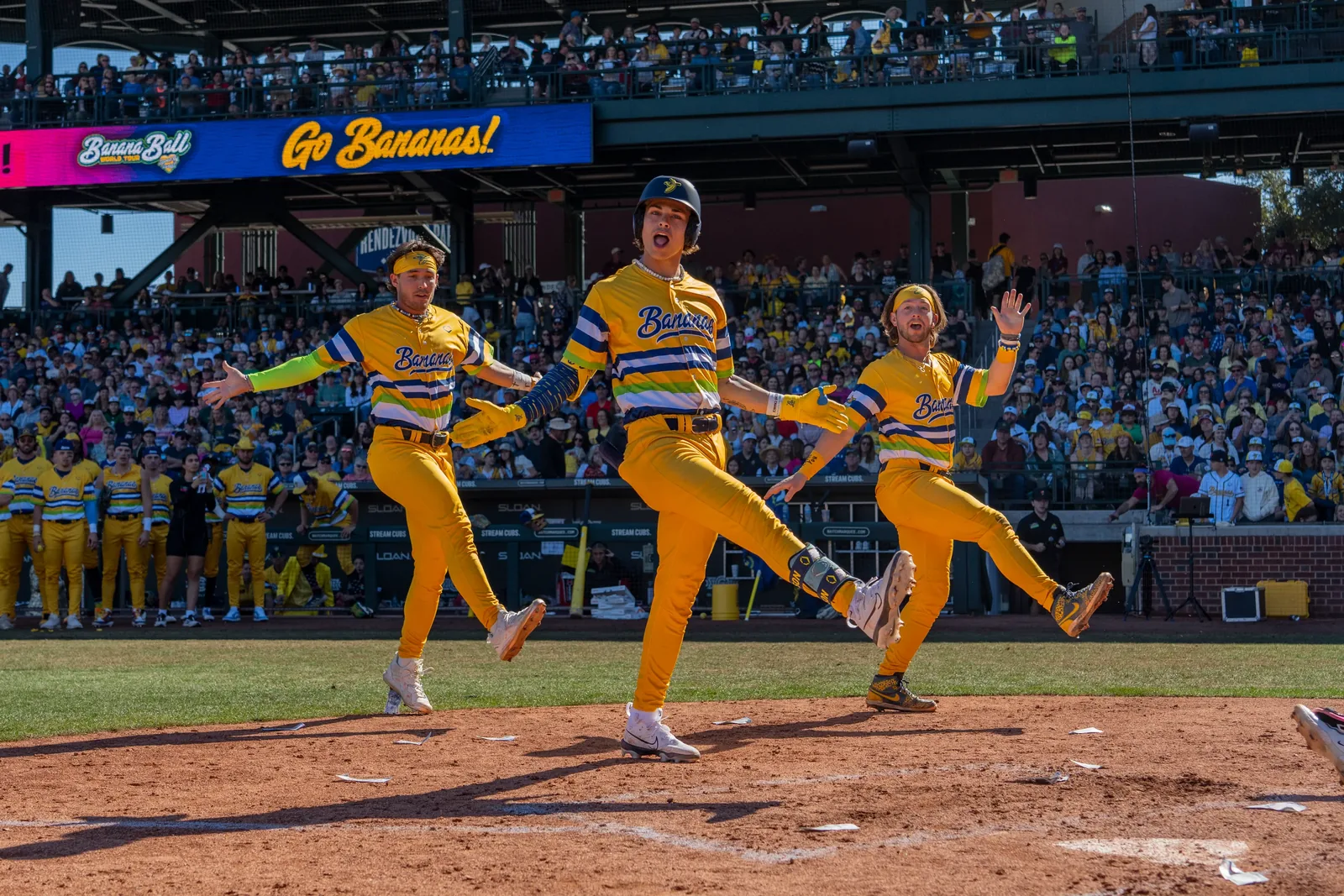
The 2016-2022 Coastal Plain League Bananas
These Bananas were a college summer team. Players could sharpen conventional baseball skills in a competitive wood-bat environment while remaining connected to their college programs. When official records say dozens of Bananas were drafted, they are describing athletes who also built their r?sum?s at schools, showcases, and other scouting checkpoints. Savannah was one chapter, not an MLB farm assignment.
Year-round Banana Ball and the 2026 BBCL
The current organization calls its six clubs independent professional teams. They play Banana Ball?s own rules and combine competitive baseball with trick plays, choreography, pace, and direct fan entertainment. ?Professional? accurately describes paid sport as a job; it does not mean ?affiliated with MLB.? A useful rule is simple: check the player?s Savannah season before drawing a career-path conclusion. A 2019 CPL alumnus and a 2026 BBCL player may share a uniform history, but they did not enter the brand through the same baseball system.
Which Savannah Bananas alumni have reached MLB?
Braden Shewmake and Cade Marlowe provide two clean, documented examples. Both played for Savannah during its Coastal Plain League era, entered affiliated baseball through the MLB Draft, spent years developing in the minor leagues, and then appeared in MLB. Their stories prove that Bananas alumni can reach the majors. They do not prove that the current BBCL functions as a farm league.
| Player | Savannah context | MLB Draft | Major-league milestone |
|---|---|---|---|
| Braden Shewmake | 10 games for the 2016 CPL Bananas | Atlanta, first round, No. 21 overall in 2019 | MLB debut on May 5, 2023 |
| Cade Marlowe | Summer 2018 CPL Bananas | Seattle, 20th round in 2019 | MLB debut on July 20, 2023 |
Braden Shewmake: from the 2016 Bananas to a first-round selection
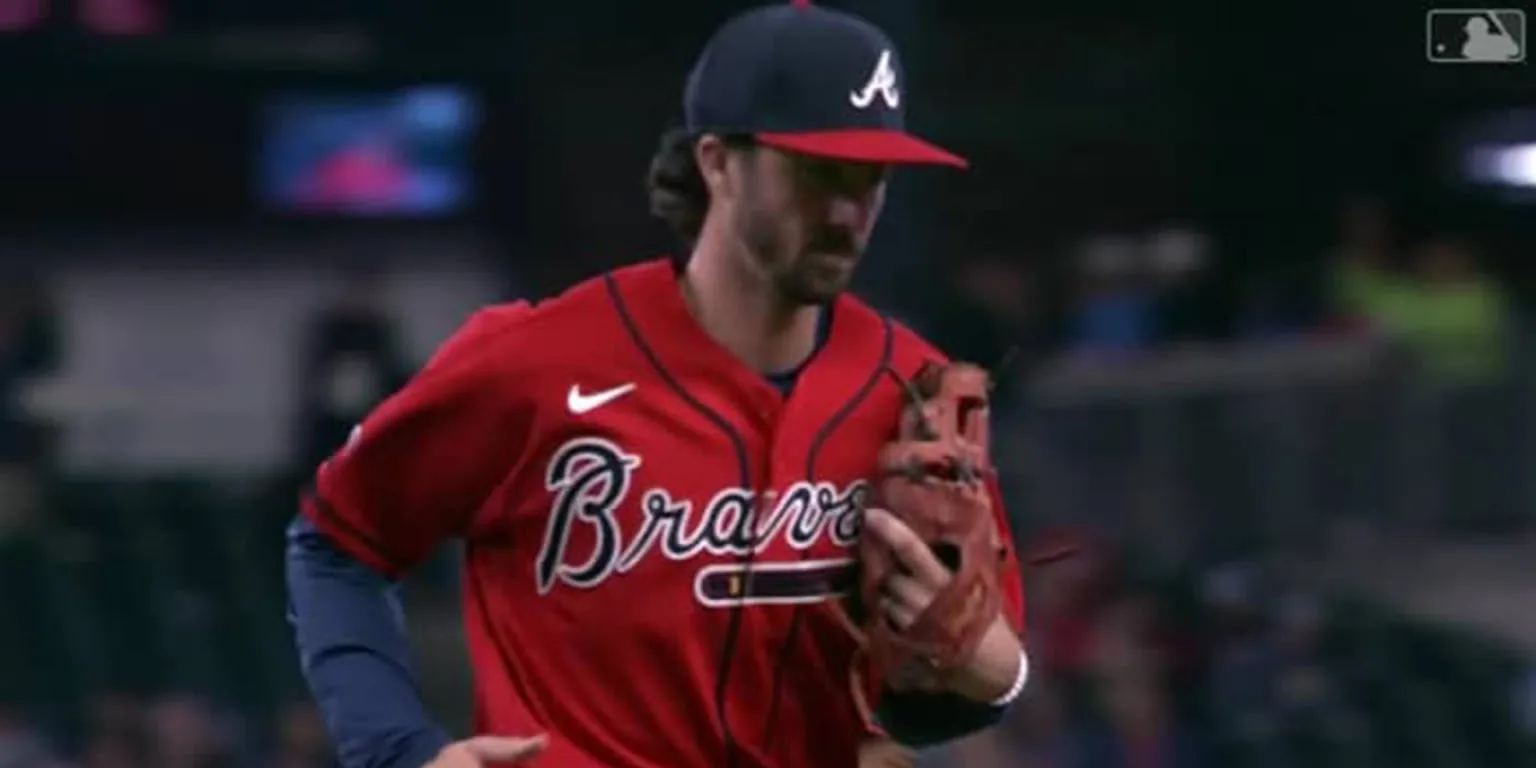
The Coastal Plain League?s official 2019 draft archive says Shewmake joined Savannah in the summer of 2016, played 10 games, and hit .290 in 31 at-bats. He later starred at Texas A&M, and Atlanta selected him with the 21st overall pick in 2019. MLB.com records his debut for the Braves on May 5, 2023. The sequence matters: Savannah summer ball came first, college development continued, the draft opened the affiliated route, and the minor leagues bridged the four years to his debut.
Cade Marlowe: a 2018 summer stop before the Mariners drafted him
MLB.com reports that Marlowe played for Savannah in summer 2018 while finishing his college career at West Georgia. He described the opportunity as summer baseball close to home and a chance to play in front of scouts. Seattle picked him in the 20th round the following year. After progressing through the Mariners? farm system, he debuted in July 2023 and played 34 major-league games that season.
The terminology test is straightforward. A player who is drafted has been selected by an MLB club, but may never reach the top level. A player in the minor leagues is developing within affiliated professional baseball. A player who has reached MLB must have appeared in a major-league game. Keeping those milestones separate prevents an impressive draft list from being mislabeled as a list of major leaguers.
Why the old Coastal Plain League produced draft picks
Summer-collegiate baseball fits naturally into the amateur scouting calendar. The Coastal Plain League recruits college players in good academic and athletic standing, and MLB.com described it as a wood-bat league where those players could display their skills to scouts and fans. They arrived with college coaching, statistics, and eligibility already attached to their profiles. After the summer, they generally returned to school and continued developing before becoming draft eligible.
The wood-bat setting was useful because most college games use metal bats. It gave evaluators another look at contact quality, strike-zone decisions, pitching, defense, and adaptation to a busy summer schedule under equipment closer to the professional game. That did not turn a CPL club into an MLB affiliate. It made the league one more observation point within a much larger amateur process that included a player?s college season, medical information, physical projection, interviews, and other evaluations.
Savannah?s archived draft totals show the overlap clearly:
- In 2019, the CPL reported that Savannah led its clubs with 12 current or former players selected, including first-rounder Braden Shewmake.
- In 2021, Savannah and Lexington County shared the league lead with eight current or former players selected.
- The Bananas? own history says more than 35 players were drafted across the club?s seven collegiate seasons.
Those figures are impressive, but the wording matters. ?Current or former? can combine players from different Savannah summers, different colleges, and different stages of development. It would be inaccurate to treat each annual total as one roster sent directly into pro baseball, or to credit a summer club for every step that followed. The sound conclusion is narrower: the old Bananas participated in a respected college-summer environment populated by draftable athletes.
That is also why these numbers cannot be copied onto today?s BBCL. The old recruiting pool, eligibility context, rules, schedule, and player objective were built around summer-collegiate baseball. Modern Banana Ball assesses conventional talent too, but it also asks players to execute its distinct rules and deliver an unusually demanding live show. The brand connects the eras; the player-development structure does not.
Is today?s Banana Ball Championship League an MLB feeder league?
No official source checked for this guide identifies the BBCL as an MLB affiliate, farm system, or MLB Partner League. The Bananas describe the league?s clubs as independent professional teams. By contrast, MLB says its 120 full-season affiliated Minor League teams form a developmental system: MLB organizations contract players and assign them to affiliates at defined levels. That organizational relationship is what makes a farm team a farm team.
The distinction is about control and transactions, not whether Banana Ball players are talented. An affiliated minor leaguer is already under contract to an MLB organization, which can move him among its levels and, subject to roster rules, call him to the majors. A player on the current Savannah Bananas team belongs to an independent BBCL roster. There is no automatic promotion lane from that roster into a particular MLB organization.
Three visible connections can create a false impression of affiliation:
- Former affiliated players compete in Banana Ball. Their prior experience shows roster quality, but their old MLB contracts do not convert the BBCL into a farm system.
- Banana Ball visits MLB and MiLB stadiums. A venue rental or hosted event does not give the visiting teams affiliate status.
- MLB alumni make guest appearances. A special appearance is entertainment and collaboration, not a player-development assignment.
Use this checklist when a post claims that Banana Ball is ?sending? someone to MLB:
- Does an MLB club announce a signing, draft selection, or transaction?
- Does the player have an official MLB or MiLB transaction record?
- Is the player assigned to one of that organization?s affiliates?
- Does the story identify the player?s Banana Ball season, rather than relying on the undated phrase ?former Banana??
If the answers stop at a viral clip or a stadium connection, the feeder-league claim is unsupported. This does not close the door on individual movement. Independent-baseball players can attract interest and sign elsewhere. It simply means that such a move would require a separate decision and transaction; it would not be a routine BBCL promotion. That is the same precision readers should expect when distinguishing an MLB Partner League from an affiliated minor league.
Can a current Banana Ball player still sign with an MLB organization?
It is possible in principle, but the answer for any named player depends on facts that cannot be assumed: age and draft status, existing contracts, release or free-agent status, health, an MLB club?s evaluation, and an actual agreement. Playing Banana Ball neither guarantees an opportunity nor creates a blanket barrier. The reliable proof would be an official draft result, signing announcement, or transaction?not speculation based on a highlight.
Skills that can transfer
Banana Ball still demands difficult baseball actions. Pitchers must command pitches and disrupt timing. Hitters must recognize spin, make contact, and produce against live velocity. Fielders need hands, range, arm strength, and body control. Speed, coordination, durability, and competitive decision-making remain observable. A scout can appreciate those tools even when the game around them uses different rules.
The modern format may also reveal adaptability. Players work in loud environments, operate under a fast clock, learn choreography, interact with fans, and recover quickly when a trick play fails. Those qualities can say something positive about composure and athletic creativity. They are not substitutes, however, for the conventional performance data and projection an MLB organization uses to make personnel decisions.
What does not translate directly
Banana Ball points, special rules, and showmanship do not map neatly onto an MLB box score. A spectacular between-the-legs catch may demonstrate coordination, but evaluators still need to know whether the player consistently reads a standard batted ball and makes the routine play. A hitter?s success under Banana Ball?s pace does not by itself answer how he performs over an affiliated season, against a particular pitch mix, or within MLB roster constraints.
The routes matter too. The Rule 4 Draft is an amateur draft with defined residency, school, age, and timing rules. A player who has already turned professional may instead need to be eligible and free to sign under applicable rules and contracts. This guide cannot determine those details for an individual, and fans should be skeptical of anyone who does so without documents.
For players whose actual goal is joining the BBCL, the relevant process runs in the opposite direction; see the separate guide to becoming a Banana Ball player. For an MLB goal, the practical priorities remain obtaining qualified representation or career advice, preserving verified video and data, understanding contractual status, and treating only an MLB club?s official transaction as confirmation.
How to tell what a ?former Savannah Banana? headline really means
Team names are memorable; timestamps are more informative. A headline can be technically true while leaving readers with the wrong career story. Use this five-step check before repeating it:
- Find the Savannah season. A year from 2016 through 2022 may point to the CPL team. Do not assume a recent article describes recent Banana Ball service.
- Name the competition. Look for Coastal Plain League, a separate touring Banana Ball roster, or the 2026 BBCL. The uniform alone is not enough.
- Identify the milestone. Was the player drafted, signed, assigned to a minor-league club, added to a 40-man roster, or used in an MLB game? Each statement has a different threshold.
- Confirm it in official records. Match a CPL archive or Bananas history entry with an MLB club report, player page, or transaction log.
- Check the publication and transaction dates. Old affiliations often resurface years later when a player reaches a new level.
Leighton Finley is a useful 2025 example. The CPL archive labels him ?Savannah ?22,? while MLB?s Red Sox draft coverage lists the University of Georgia right-hander as Boston?s sixth-round selection, No. 178 overall, in 2025. The three-year gap does not connect him to the 2025 or 2026 Banana Ball rosters; it connects a later draft result to his last season in Savannah?s collegiate era.
Finley?s record also illustrates why the milestone label matters. His official MLB data page shows minor-league work in 2026. That supports ?former Savannah player drafted by Boston? and ?playing in the Red Sox system.? It does not support ?made the major leagues? unless an official MLB appearance is recorded later. The same discipline protects players as well as readers: it gives proper credit for a real achievement without inflating it into a different one.
For current-roster questions, start with the site?s team tools instead of an undated social post. For career claims, use the historical archive and MLB record together. A trustworthy sentence should be able to include a season, league, transaction, and date without changing its meaning.
Frequently asked questions
Are Savannah Bananas players professional baseball players?
Current Savannah and BBCL players are part of what the organization officially calls six independent professional teams. That answer does not apply backward to every alumnus: the 2016-2022 CPL Bananas were a summer-collegiate club. Always attach the season when describing a player?s status.
Has a Savannah Bananas player made the major leagues?
Yes. Braden Shewmake and Cade Marlowe are verified examples who appeared in MLB in 2023 after playing for the collegiate-era Bananas. Their path included college baseball, the MLB Draft, and affiliated minor-league development. They were not promoted from the modern BBCL.
Can MLB teams draft players directly from Banana Ball?
MLB teams draft eligible amateurs under Rule 4, whose conditions concern residency, schooling, age, and timing. Banana Ball is not a special draft category. A player?s individual amateur or professional status determines whether the draft, free agency, or another permitted transaction could apply.
Is Banana Ball part of Minor League Baseball?
No. MiLB is MLB?s affiliated developmental system, with players assigned to farm clubs by MLB organizations. The BBCL is an independent professional league. Playing games at a minor-league or major-league stadium does not change that status.
Should a prospect choose Banana Ball to reach MLB?
Not on the assumption that it is a feeder league. A prospect should compare coaching, playing time, competition, health support, visibility, eligibility, contract terms, and personal goals with qualified advisers. Banana Ball offers real professional competition and a distinctive performance role, but an MLB opportunity still depends on the player?s tools, status, and an MLB club?s decision.
Bottom line: Banana Ball and MLB can appear in the same player biography, but the bridge is not automatic. Date the Savannah experience, name the league, and verify the transaction. That three-part habit preserves the genuine accomplishments of Bananas alumni without turning a shared brand into a development pipeline that official records do not show.
Comments
Comments are reviewed before publication. Spam, personal information and abusive content are not published.
Loading comments…